
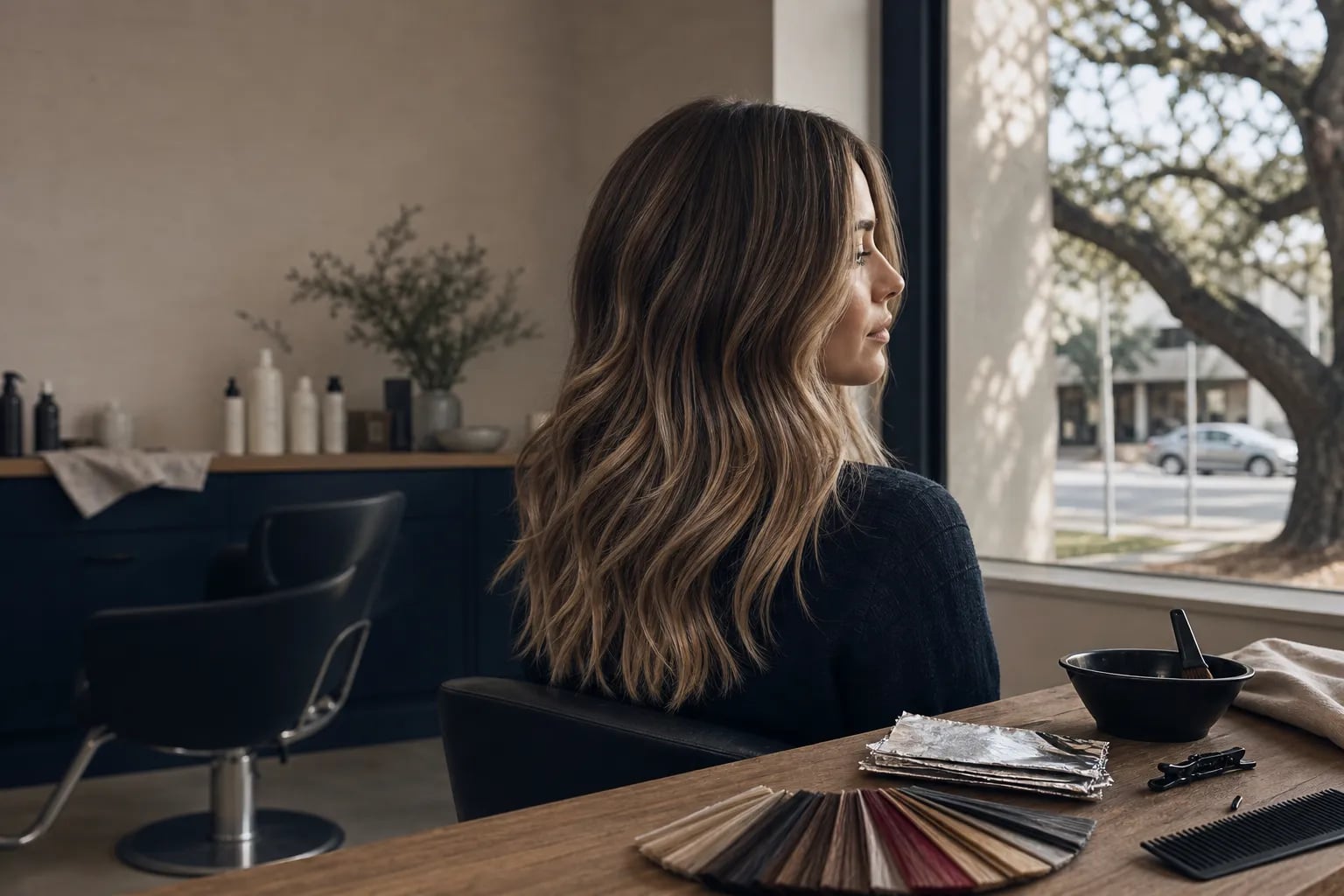
Want a grow out friendly color that still looks intentional at week 12? You leave the salon feeling like a completely different person. The color is perfect, the tone is exactly right, and you cannot stop looking at yourself in every reflective surface on the drive home. Then week five hits. The roots come in, the tone shifts slightly toward brassy, and suddenly your gorgeous color looks less “lived-in” and more “overdue.” Sound familiar? Most people assume this is just how hair color works. It is not.
A color that grows out gracefully is not the result of luck or an expensive formula. It is the result of decisions made during the consultation, before any product touches your hair. Everything from shade family and placement technique to developer strength and formula type shapes how your hair behaves for the next three to four months. At Harlow Beauty and Hair Salon in North Austin, that planning is part of every appointment, not an afterthought added at the end.
This article breaks down exactly what separates a color that ages beautifully from one that shows regrowth within a month. By the end, you will know what to ask for, what to avoid, and how to keep your color looking intentional long past week twelve.
What actually makes a hair color “grow-out friendly”
The root of the problem (literally) is not your roots. It is the contrast between your regrowth and your colored lengths. A high-contrast color like platinum blonde on a naturally dark brown base creates a sharp, obvious line of demarcation within three to four weeks. A low-contrast color that sits within one to two levels of your natural base lets regrowth blend in rather than stand out. That distinction is the single most important factor in how long your color stays looking intentional.
Tone choice is the second piece of the puzzle, and it is often overlooked. When a stylist selects a tone that naturally complements your root color, the grow-out transition is smooth. Cool ash against a naturally cool base creates harmony as the hair grows, and so does warm bronde against a golden natural base. When the tones are mismatched, you get a jarring shift even if the level difference is small, your hair can be just one shade lighter than your roots and still look off if the undertone clashes.
Formula type matters more than most clients realize. Demi-permanent color deposits tone without lifting the hair’s underlying pigment. It fades gradually over time, which means the line between colored lengths and new growth softens rather than sharpens. Permanent color penetrates deeper and holds more firmly, which is great for coverage and longevity but tends to leave a crisper, more obvious root line as new growth comes in. Neither option is wrong, but understanding the trade-off helps you make an informed choice for your lifestyle.
Placement techniques that prevent a hard root line
Balayage
Balayage is the technique most consistently associated with soft, low-maintenance grow-out, and there is a straightforward reason why. The application starts softly near the root and becomes more concentrated toward the ends, mimicking the way hair naturally lightens after sun exposure. Because the color never starts right at the scalp, there is no distinct painted line to grow out from. Clients with well-placed balayage regularly stretch their appointments to twelve to sixteen weeks without hitting an awkward phase.
Root smudge and root melt
Root smudging, root melts, and shadow roots are related but distinct root-blending techniques, and each solves a slightly different problem. A root smudge applies a demi-permanent tone at the regrowth zone and feathers it downward, erasing the hard contrast line between highlights and new growth. It typically covers only about an inch and is chosen when the goal is a subtle, seamless result. A root melt blends two or more tones together from root to mid-length, creating a gradual shift. A shadow root places a noticeably darker shade at the roots and extends it farther down the hair, producing a deeper gradient that makes any future regrowth look completely intentional from day one.
Babylights
Babylights are a highly effective technique for achieving a natural-looking grow-out. These extremely fine, scattered highlights blend more subtly than traditional foil highlights because there is no single, consistent highlighted stripe to grow away from. When a stylist combines babylights with lowlights in the same session, the result is a multi-tonal, dimensional look where any new growth simply adds to the depth rather than disrupting the pattern. It reads as effortless rather than overdue.
The shades that grow out most gracefully
In the brunette family, the shades that hold up longest between appointments are mushroom brown, ash brown, honey bronde, and rich warm brunettes with dimensional depth. These shades work because they tend to sit close to most people’s natural base levels, and their muted, multi-tonal quality means any root growth blends into the color rather than separating from it. Dimensional brunette, which layers subtle highlights and lowlights over a brown base, is one of the most forgiving low-maintenance hair color options available for clients who want noticeable color but genuinely cannot commit to frequent salon visits.
Not all blonde is high-maintenance either. Beige blonde, golden wheat blonde, and ash blonde are chosen specifically for their ability to transition without a harsh root line because they avoid the extreme contrast of icy platinum. When a skilled stylist adds a shadow root under any of these shades, the appointment window stretches significantly. The shadow root does the heavy lifting by making any natural regrowth appear like part of the original design.
It is worth knowing where the trade-offs are, so you know what you are signing up for. High-lift platinum on a dark base creates the fastest, most visible regrowth of any color option. Vivid fashion shades like pink, blue, and saturated red require refreshing every two to six weeks, not because of root growth specifically, but because the pigment fades quickly. Single-process all-over color that is dramatically different from your natural level creates a sharp, obvious line as soon as the hair grows. None of these are bad choices, but they come with a clear maintenance commitment. If low upkeep is a priority, staying in the low-contrast, rooted, or blended color family is the smarter starting point.
How Harlow designs every formula with grow-out built in
At Harlow Beauty and Hair Salon, the consultation is not a quick conversation before color is mixed. It is where the entire plan takes shape. Stylists map out not just what the color will look like on day one, but how it will behave at week six, week ten, and week twelve. That means asking the right questions: How often do you realistically make it to the salon? How fast does your hair grow? What is your natural base level and undertone? How much maintenance are you actually willing to do at home? The answers shape every placement and formula decision before a single brush is picked up.
That planning shows up in the specifics: placement that starts away from the root to prevent hard lines, tone selection that complements the client’s natural base so regrowth blends rather than clashes, and formula choices that fade gracefully. Harlow stylists work with professional color and care lines, including Kérastase, which offers formulas designed to hold tone evenly and break down softly over time. Demi-permanent options are used strategically, especially in root zones where a softer grow-out is the goal.
With that kind of planning in place, a client who leaves Harlow in September is not just happy about how her hair looks that day. She is walking out with a color designed to still look right when she comes back in December. That is the difference between treating a grow-out as a problem and designing around it from the start.
Keeping your color looking intentional between appointments
The biggest enemy of color longevity is a sulfate-heavy shampoo used too frequently. Sulfates strip artificial pigment faster than almost anything else, and when your color fades, the contrast between your roots and your lengths becomes more obvious. Switching to a sulfate-free, color-safe shampoo and reducing wash frequency to two or three times per week is one of the highest-impact habit changes most clients can make. Rinsing with cool water rather than hot is also commonly recommended by stylists to help close the cuticle and reduce immediate fading.
At-home glosses and color-depositing conditioners are the next tier of the maintenance routine. A weekly gloss refreshes shine and unifies tone across your entire length, which visually reduces the contrast between roots and colored ends. Color-depositing conditioners or masks used every one to two weeks add pigment back into fading lengths, keeping the color looking saturated and intentional rather than washed out. The Kérastase color care line, available at Harlow, is stylist-recommended for this kind of between-appointment upkeep for color-treated hair and is worth asking about at your next visit.
One important clarification: at-home products maintain and extend a good color. They do not fix a poorly planned one. The foundation has to be right from the salon chair. If your placement, shade, and formula were chosen with grow-out in mind, your at-home routine has something solid to work with. If they were not, even the best gloss in the world is fighting an uphill battle.
The right questions to ask before your next appointment
A grow-out friendly color is a conversation, not an accident. Walking into your next consultation with a few specific questions puts you in the driver’s seat. Ask your stylist which placement technique will soften your grow-out, whether your shade choice sits close enough to your natural base level, and whether a demi-permanent formula would be a better fit for certain areas of the application. Ask how long you can realistically expect to go between appointments and what the color will look like at the twelve-week mark.
At Harlow, those questions are already part of the conversation before you sit down. The consult-led approach means your stylist is thinking several months ahead from the moment you walk in, not just about what looks beautiful today. Reach out to the team at Harlow Beauty and Hair Salon to start that conversation; come in knowing exactly what you want your color to do for you. The goal is a color that earns you a compliment in the salon parking lot and again three months later at a dinner with friends.
The best hair color appointment is not the one that looks perfect the day you leave. It is the one planned, from the very first formula decision, to stay looking great well past week twelve. Choosing a grow out friendly color from the start is what separates a grow-out that frustrates you from one that genuinely surprises you with how long it holds.