
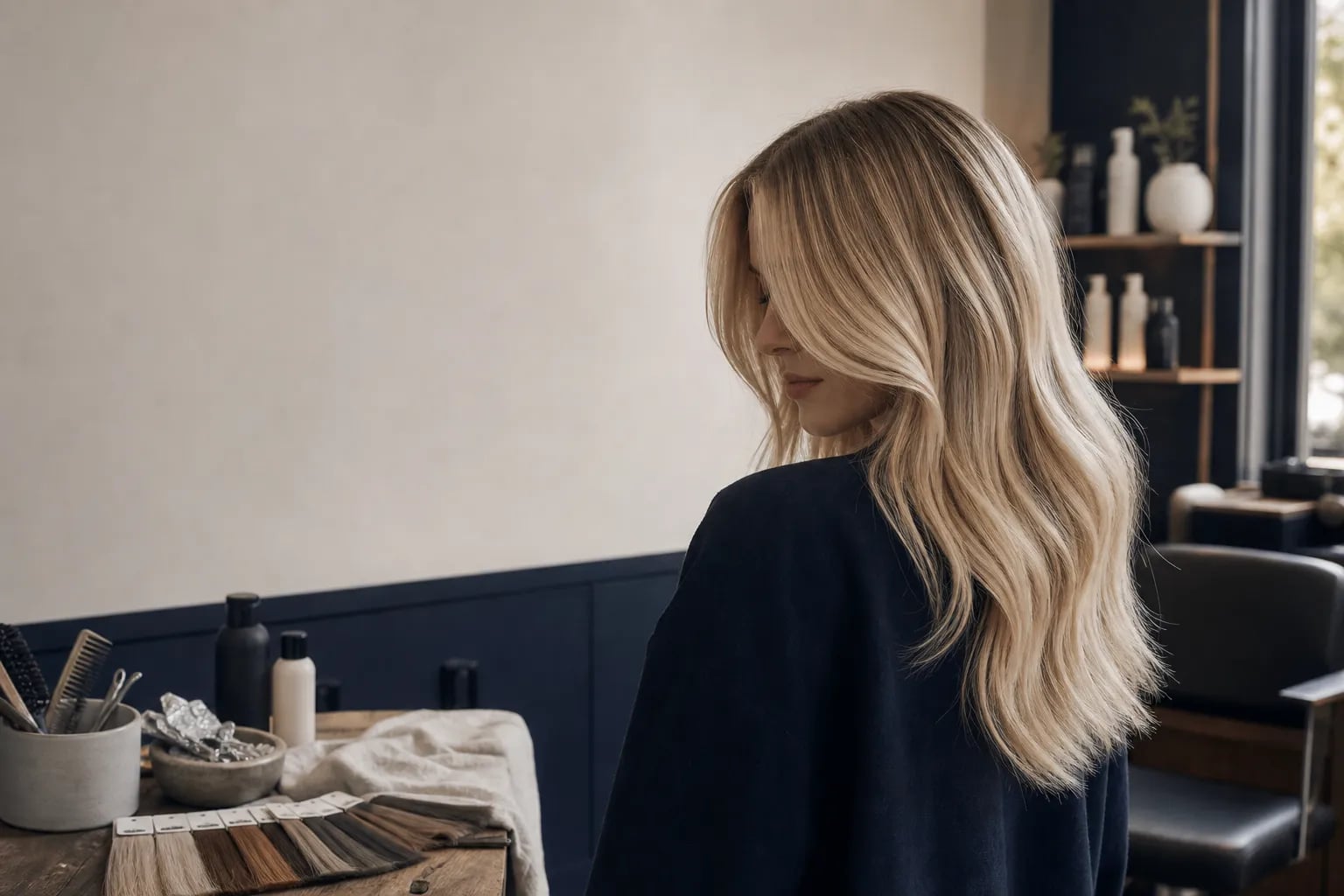
Blonde hair maintenance is often the real challenge that begins the moment clients leave the salon. The color looks stunning walking out, then turns yellow or brassy within two or three weeks. It’s frustrating, and it’s not random.
Bleached and highlighted hair is structurally porous, making it one of the most maintenance-intensive color categories out there. That open cuticle absorbs minerals from your water and residue from products, and porous hair is far less able to buffer thermal stress than unprocessed hair, meaning heat-related damage accumulates faster too. Without a consistent routine in place, the tone you paid for starts slipping away within a few weeks.
This guide covers exactly what it takes to keep blonde hair bright and brass-free: the right washing frequency, how to use purple shampoo without overdoing it, when to book toning appointments, how to repair bleach damage at home, and the daily habits that most people overlook. At Harlow Beauty and Hair Salon in North Austin, every blonde client leaves with a personalized at-home care plan tailored to their specific color service, porosity level, and lifestyle. The thinking behind those plans is exactly what you’ll find here.
This is a complete system, not just a product list.
How often you wash your hair matters more than you think
Bleached and highlighted hair is porous by nature, meaning it loses moisture and color pigment faster with every wash. For most blondes, washing two to three times per week is the sweet spot that keeps the scalp clean without stripping tone and moisture from the lengths. If your hair is very dry, brittle, or heavily processed from multiple bleach sessions, pulling back to one or two washes per week makes a meaningful difference in color retention and breakage reduction.
After a fresh color service, wait 48 to 72 hours before your first wash. This gives the toner time to fully set into the hair fiber. Washing too soon rinses out tone before it’s had a chance to bond properly, which is a fast way to lose days of longevity from an appointment you just invested in.
Choosing a color-safe shampoo for blonde hair
The ingredient list on your shampoo matters more than the marketing on the front of the bottle. Avoid formulas with sulfates like sodium lauryl sulfate (SLS) and sodium laureth sulfate (SLES). These are effective cleansers, but they strip color and moisture from bleached hair faster than gentler surfactant alternatives. Drying alcohols such as isopropyl alcohol and denatured alcohol are also worth avoiding, as is anything heavy with buildup-prone polymers that coat the hair without nourishing it.
Instead, look for sulfate-free formulas with hydrating surfactants, humectants like glycerin and panthenol, and a pH level that respects the cuticle. These formulas cleanse without aggressively opening the cuticle, which is where color loss begins.
Blonde hair maintenance: using purple shampoo the right way
Purple shampoo is a toning tool, not a regular cleanser. It works by depositing violet pigment that neutralizes the yellow and orange tones that develop in blonde hair as color oxidizes and fades. Used correctly, it extends the life of your toner between salon visits. Used too aggressively, it creates a whole new problem: dull, flat, gray-tinged hair that reads more ashy than blonde.
Start with once a week and adjust from there
Begin with one purple shampoo session per week. If brassiness returns within a few days, increase to twice a week at most. Watch for signs of over-toning: if the hair starts looking gray, dull, or weirdly cool in a flat way rather than a clean way, cut back immediately. That’s violet pigment over-depositing on already porous hair.
Application technique also matters. Work the product evenly through damp hair from root to tip rather than scrunching it in quickly and rinsing. Stylists typically recommend leaving it on three to five minutes for a subtle tone refresh, or up to ten to fifteen minutes when brassiness is stronger. Rinse with cool water, which helps close the cuticle and lock in pigment. Always follow with a moisturizing conditioner because most purple shampoo formulas are drying on their own.
Toning and gloss appointments: how often your blonde actually needs them
At-home purple shampoo buys you time between appointments, but it doesn’t replace a professional toner or gloss. In-salon treatments deposit longer-lasting tone and seal the cuticle in a way that no rinse-out product can fully replicate. A toner is primarily a color corrector, targeting brassy or yellow tones after lightening. A gloss is more of a shine-enhancing refresh that works well when the color is fundamentally correct but looks dull or flat.
Blonde hair maintenance and the 4, 6 week toning window
For most blondes, booking a toner or gloss every four to six weeks is the standard maintenance window. If the color service used a demi-permanent formula or the hair is very light, that window can tighten to every three to four weeks. Dimensional blondes, balayage and lived-in highlights, as opposed to full platinum, often stretch comfortably to six to eight weeks without visible fading because there’s more contrast built into the color itself.
Skipping toner appointments tends to create a cycle that’s harder on the hair than the appointments themselves. When brassiness goes untreated, clients often compensate by reaching for stronger at-home toning products or trying to re-bleach at home, a pattern that raises the risk of significant damage far faster than any single professional service. Keeping a consistent gloss schedule actually protects the hair by slowing visible fade and reducing the urge to over-process between visits.
Repairing bleach damage with the right treatments at home
Bleaching breaks disulfide bonds inside the hair fiber. That’s why heavily bleached hair feels mushy, stretchy, or snaps off easily. It’s not just dry; it’s structurally compromised. Bond-building treatments like Olaplex No. 3 and K18 are designed specifically to address this kind of internal damage by reconnecting those broken bonds.
Bond builders for structurally damaged blonde hair
Use a bond builder one to two times per week for damaged hair, and treat it as a dedicated step rather than mixing it into your regular conditioning routine. These products support real structural repair, but they work best when the rest of your routine is equally gentle. Low-frequency washing, sulfate-free cleansing, and minimal heat exposure all reinforce what the bond builder is doing. One treatment a week won’t undo daily damage from harsh products and excessive heat.
Deep conditioning masks and protein treatments
Rotate a moisturizing deep mask weekly to restore softness and reduce brittleness. Look for masks formulated for high-porosity or chemically treated hair, with emollients, hydrolyzed proteins, and repairing ingredients. If the hair feels gummy or overly elastic when wet, that’s a sign you need a protein treatment. Protein temporarily fills weak spots in the fiber and improves elasticity, but it’s a “use as needed” step rather than a weekly ritual. Overusing protein treatments makes hair stiff and brittle over time.
A leave-in conditioner or bonding spray used daily rounds out the routine by reducing friction, adding a protective layer to the cuticle, and helping the hair retain moisture between washes. Think of it as sealing in the work the other treatments are doing.
Heat protection and daily habits that preserve your blonde
Bleached hair has a compromised cuticle that can’t buffer heat stress the way natural hair can. Every time heat tools contact unprotected blonde hair, they accelerate fading, dryness, and breakage. Apply a heat protectant every single time heat touches the hair, not just on heavy styling days. Even diffusing counts.
For bleached or color-treated hair, the most effective heat protectants combine silicones or film-forming polymers with protein support and hydration retention. Look for ingredients like amodimethicone, dimethicone, polyquaterniums, and hydrolyzed proteins. Oils like argan and coconut add shine and slip but don’t provide the same barrier-level protection that silicone and polymer-based formulas do.
Small daily habits that add up over time
Water temperature is easy to overlook but genuinely matters. Hot water opens the cuticle and lets color molecules escape with every shower. Rinsing with cool or lukewarm water keeps the cuticle closed and slows the fading process. Swapping a regular terrycloth towel for a microfiber towel or a soft cotton t-shirt also reduces friction on the cuticle when blotting wet hair.
If you live in an area with hard water, mineral buildup is likely one of the biggest contributors to brassiness in your hair, and most clients never think to address it. Iron and copper deposits from hard water cling to the porous surface of bleached hair and create warm, yellow, and orange tones that no amount of purple shampoo fully clears. Use a chelating shampoo once a month to remove that mineral buildup and give your toner a clean slate to work from.
How Harlow’s colorists set their blonde clients up for success at home
At Harlow Beauty and Hair Salon on Burnet Road in North Austin, the appointment doesn’t end when the color is rinsed out. Every blonde client leaves with a specific at-home care plan built around their hair’s porosity, damage level, lifestyle, and the exact service they received that day. That plan isn’t a generic handout, it’s built around the client’s formula, water type, and washing habits so the recommendations actually fit their real life.
Kérastase’s Blond Absolu line is one of the ranges Harlow’s stylists reach for most often with blonde clients. It’s formulated specifically for bleached and highlighted hair and contains ingredients like hyaluronic acid targeted to blonde hair, in contrast to many mass-market options. Many stylists and users report that a targeted, salon-grade blonde routine can extend tone and improve hair feel compared with standard over-the-counter alternatives, and that difference typically shows up within the first few weeks.
Harlow’s team includes a Kérastase Ambassador who helps match clients to the right products as part of every blonde service, a detail that reflects the salon’s broader commitment to building your color maintenance plan right into the appointment itself.
Consistent blonde hair maintenance is a system, not a single step
Everything covered here works together. Wash two to three times a week with a sulfate-free, color-safe shampoo and use purple shampoo once a week to manage tone at home. Book a professional toner or gloss every four to six weeks to maintain depth and shine, and treat bleach damage with bond builders and deep masks consistently. Protect the hair from heat every time, and keep an eye on the small things: water temperature, hard water buildup, the towel you’re using.
The gap between blonde that stays fresh and rich for months and blonde that turns brassy in two weeks almost always comes down to what happens at home between appointments. Consistent blonde hair maintenance is the difference, and it doesn’t have to be complicated to be effective.
If you’re in the North Austin area and want a colorist who builds your at-home routine into every appointment, reach out to Harlow Beauty and Hair Salon on Burnet Road. Their stylist-matching process helps new clients find the right fit based on hair goals, budget, and schedule, before you ever book a seat.