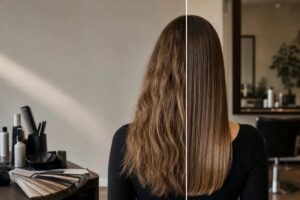
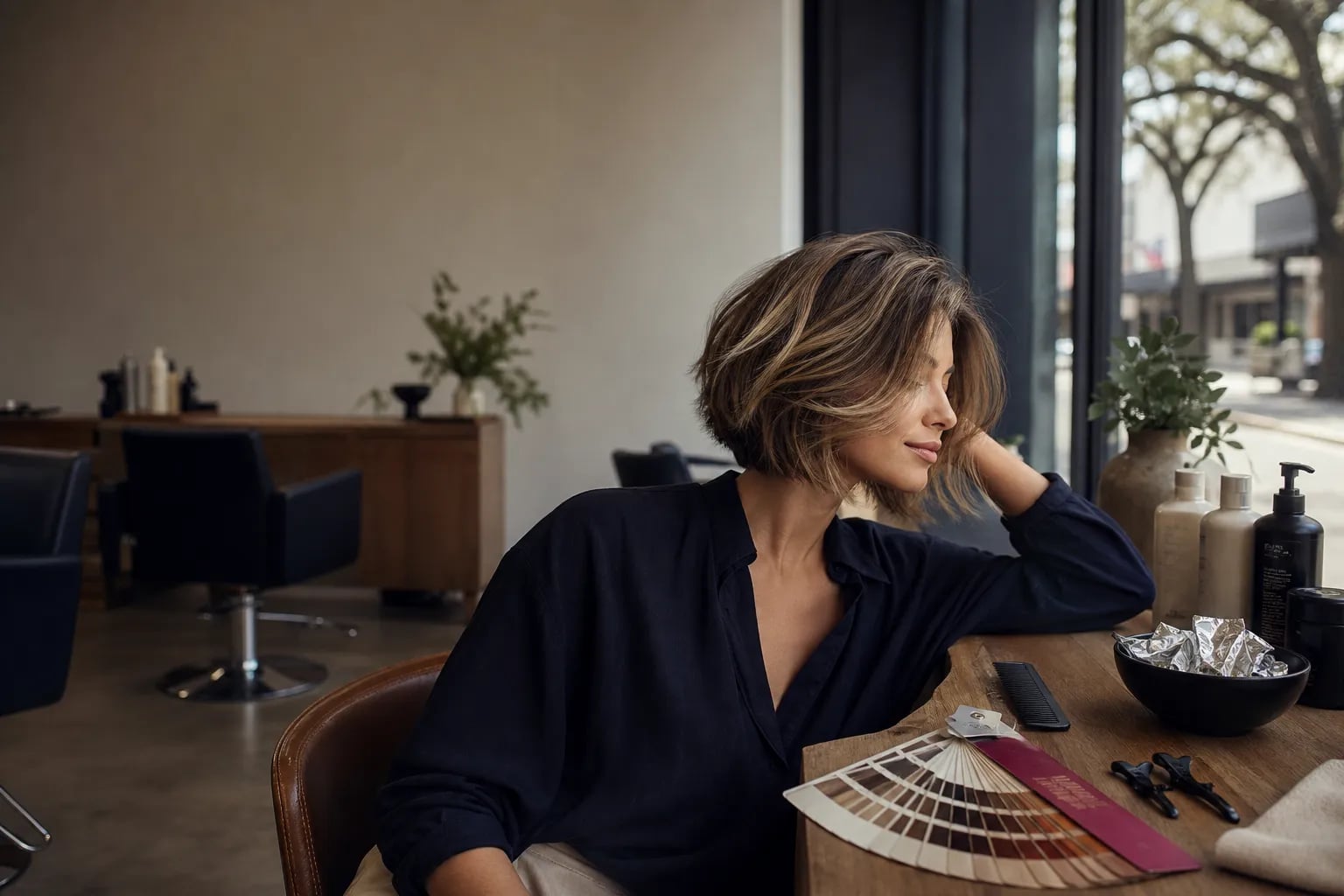
If you’re searching for the best hair color for women who can’t get to the salon often, the answer starts with technique, not shade. You love your color. Your schedule, however, does not love the salon. Life piles up, the appointment gets pushed, and before you know it, four months have passed and your roots are running the show. That’s not a willpower problem. That’s a technique problem.
The wrong color approach puts you back in the chair every six weeks whether you’re ready or not. The right one gives you breathing room, because it was designed from the start to grow out gracefully instead of loudly. At Harlow Beauty and Hair Salon in North Austin, colorists build every color plan around this exact reality, mapping out technique, placement, and shade before opening a single formula, so the result works with a client’s actual schedule rather than against it.
This article covers the techniques with the longest grow-out runways, how to pick a shade that flatters your skin tone as roots push through, strategies for managing gray without constant upkeep, and the at-home products that stretch salon visits safely and simply.
Why your color technique matters more than the shade
Most people fixate on the color they want and give little thought to how it’s placed. That’s where the maintenance problem starts. Traditional all-over color deposits pigment from root to tip in a single, uniform tone, which means the moment new growth appears, a clear horizontal line of demarcation forms at the scalp. For many people, that line becomes obvious in as little as four to six weeks.
The alternative is to think about placement as a design decision. When color is kept away from the scalp, blended softly into the root zone, or kept close to the natural base in tone, new growth doesn’t announce itself. The eye doesn’t register a shift because the shift is gradual. That’s the entire foundation of low-maintenance, salon-proof hair color: build in the forgiveness before the color is ever applied, and the grow-out takes care of itself.
Hand-painting color onto the mid-shaft and ends, softening the root zone to match incoming growth, or using very fine highlights close to the natural base are all placement strategies that buy you time. They aren’t just aesthetic choices. They’re structural decisions that determine whether your color looks intentional at week twelve or starts falling apart at week five.
Best hair color for women who can’t get to the salon often, low-maintenance techniques with real grow-out timelines
Balayage: the longest runway
Balayage is the benchmark for root-friendly color. Because it’s hand-painted onto the mid-lengths and ends with no foils at the scalp, the root area stays close to natural, and new growth blends into that transition softly. There’s no hard line waiting to surface at the four-week mark.
Most clients comfortably stretch to 12 to 16 weeks between visits. Soft placements with a root shadow added at the scalp can push that to four or five months. Balayage is the strongest choice for women who want sun-kissed dimension without hard commitments to a tight maintenance schedule, making it one of the best no-touch-up hairstyles available.
Root shadow and root smudge: the low-contrast fix
A root shadow deposits a slightly deeper tone at the scalp, then blends it down into the lighter lengths to create a gradient. As natural roots grow in, they match that darker base rather than colliding with a sharp edge of light color. The result looks intentional, not overdue.
Expect a touch-up window of 10 to 14 weeks. This technique is especially effective as a gray-blending strategy, because the softened root camouflages incoming silver without requiring full permanent coverage. It’s often paired with balayage to extend the overall look significantly.
Babylights and soft highlights: subtle dimension with built-in forgiveness
Babylights are very fine, delicate highlights placed throughout the hair to create a multi-tonal, natural-looking result. Because the sections are small and the contrast is subtle, the grow-out line is soft rather than striped. They’re a strong option for clients who want lightness without the stark regrowth traditional highlights create.
Typical timeline runs 8 to 14 weeks, depending on how bright the result is and how close to the root the highlights are placed. The closer to natural the starting point, the more forgiving the grow-out.
Gloss and toning: the mid-cycle refresh
Glossing isn’t primarily about root coverage. It’s about tone. A gloss adds depth, shine, and warmth or coolness to color-treated hair, keeping it looking rich and intentional even as it ages.
As a standalone service, expect to refresh every six to eight weeks. Used mid-cycle between balayage appointments, a gloss can revive your color without requiring a full service, keeping both your calendar and your budget flexible.
Choosing a shade that flatters your skin tone as it grows out
Cool undertones: stay in the ash and pearl family
Women with cool or pink-toned skin tend to look their best in ash blonde, icy blonde, mushroom brunette, and cool espresso shades. These tones stay harmonious with the skin as they grow out and don’t pull warm or brassy as they fade. They also sit naturally beside incoming silver, which makes cool ash blonde one of the most root-forgiving shade families for anyone managing gray.
Warm undertones: lean into golden and caramel tones
Golden blonde, honey, caramel, copper, and warm brunette shades echo the skin’s natural warmth rather than fighting it. That means the grow-out looks complementary rather than jarring as natural roots emerge. Avoid shades that are overly icy or cool on warm-toned skin, those formulas can look flat and unflattering as the color fades, and the contrast with warm natural roots becomes obvious faster.
Neutral undertones: dimensional brunette and bronde are your sweet spot
Neutral skin tones have the most flexibility, but dimensional brunette and bronde with a root melt are consistently the most forgiving choices. Because they incorporate both warm and cool elements, neither looks out of place as natural roots come through. A root shadow layered on top adds another tier of camouflage for even more grow-out forgiveness.
Managing gray hair when salon visits are infrequent
Blending vs. covering: the decision that changes everything
Full gray coverage with permanent color gives maximum camouflage but creates the most visible regrowth line, often requiring a touch-up every four to six weeks. Blending techniques, including highlights, balayage, and root shadow, make gray look intentional and grow out softly without that hard line of demarcation.
For most busy women with light to moderate gray, a blending approach dramatically reduces salon dependency. The goal shifts from hiding gray to incorporating it, which is a much more sustainable long-term strategy for anyone who can’t commit to monthly appointments.
The best between-visit gray fixes
Root-filling sprays, powders, and wands are the fastest temporary fix for visible part lines or hairline gray. They wash out completely with shampoo and buy time without any commitment or risk. Semi-permanent and demi-permanent color is a softer option for women who want broader coverage without the hard regrowth line that permanent formulas leave behind. It fades gradually rather than creating a stark edge.
A practical approach: use root concealers for single visible grays, a demi-permanent for broader blending, and ask for highlights or balayage if the longer-term goal is transitioning toward a lower-maintenance gray blend. Each step builds on the last, so you’re always moving toward less maintenance rather than more.
At-home products that safely extend your salon color
Color-depositing shampoos and conditioners
Color-depositing formulas work by infusing pigment into the hair shaft with each use, refreshing tone and counteracting fade. For blondes, a purple or violet shampoo neutralizes brassiness and keeps cool tones clean. For brunettes, a blue-pigmented formula combats orange warmth. Use them one to two times per week rather than every wash. Violet and blue toning products used daily can shift tone too cool or too purple, which creates its own maintenance problem.
Premium options like the Kérastase Blond Absolu range are worth the investment for color-treated hair because they combine toning with strengthening and hydrating ingredients, both things color-treated hair needs in equal measure.
Root touch-up kits and concealers
Root concealers, including sprays, powders, and pressed formulas, are the most practical tool for managing visible regrowth between appointments. Apply to the part line or hairline, blend lightly, and they rinse out fully at your next wash. For more targeted coverage, semi-permanent root kits add roughly two to three extra weeks before a salon visit becomes necessary.
One key safety rule: apply semi-permanent root products only to regrowth, never overlapping onto already processed lengths. Overlap causes buildup, uneven darkening, and results that are harder for your colorist to work with on the next visit.
Simple habits that slow fading more than any product
At-home glosses are worth adding to any stretched-schedule routine. They refresh shine and subtly revive tone on dull, faded lengths without requiring a salon visit. Beyond products, a few simple habits make a significant difference:
- Switch to a sulfate-free, color-safe shampoo
- Rinse with cool or lukewarm water instead of hot
- Wait 48 hours after any color service before the first wash
These aren’t dramatic steps, but they consistently slow fading and extend the life of your color more reliably than chasing the perfect product. Taken together, they’re the simplest form of low upkeep hair dye maintenance available.
How Harlow’s colorists build a color plan around your schedule
At Harlow Beauty and Hair Salon on Burnet Road in North Austin, the process for new color clients starts with a real conversation, not a service menu. Colorists talk through your schedule, your lifestyle, and how often you realistically want to be in the salon chair. That consultation shapes every decision that follows: technique, placement, shade family, and the expected timeline between visits. Nothing is recommended before that picture is complete.
The team specifically builds in grow-out forgiveness from the beginning. That might mean combining a balayage base with a root shadow for maximum runway, adding dimensional tone to brunette color for a naturally blended result, or finishing with a tonal gloss that keeps the color looking purposeful for months rather than weeks. The goal is always a result that works with your hair as it grows rather than demanding constant correction.
For new clients who aren’t sure where to start, Harlow’s stylist-matching quiz pairs you with the right colorist based on your hair goals, schedule, and budget. It removes the guesswork before you ever book.
Low-maintenance color is a strategy, not a compromise
Low-maintenance color isn’t about settling for less. It’s about choosing techniques and shades that are designed to look good while growing out, supported by a simple routine that keeps the color working for you rather than demanding attention you don’t have time to give.
The core framework is straightforward: balayage and root shadow deliver the longest grow-out runways. Dimensional shades matched to your skin tone keep results flattering at week two and week twelve alike. Blending strategies for gray reduce salon dependency instead of increasing it. And a consistent at-home routine bridges the gaps cleanly.
For women in North Austin searching for the best hair color for women who can’t get to the salon often, Harlow Beauty and Hair Salon is the practical next step. Getting the technique right the first time is the single most effective salon-proof hair color strategy available, and that’s exactly what a Harlow consultation delivers. Reach out to book a consultation or take the stylist-matching quiz to get paired with the right colorist for your goals before your first visit.