You love your color on day one. By week six, you’re throwing your hair into a bun and hoping nobody looks too closely at your roots. That frustrating line where your natural hair meets your color isn’t just a timing problem, it’s a technique problem, and it’s one that’s completely solvable. The good news: there is hair color that looks good as it grows out naturally, and it comes down to choosing the right methods from the start.
The right color techniques are specifically designed so that grow-out looks like part of the style, not evidence that you missed your appointment. When a colorist builds a gradient rather than a uniform field of color, regrowth doesn’t disrupt the look because there’s no hard starting point for it to contrast against. Hair that looks polished at 8 weeks, then at 12, then at 16, isn’t lucky. It’s planned.
At Harlow Beauty and Hair Salon in North Austin, colorists map the grow-out zone into the initial design, planning root depth, transition zones, and tonal balance as a unified system before application begins. This guide explains exactly how that approach works, and what you need to ask for when you book your next color appointment.
Why some hair colors show roots fast and others barely do
The single-process color problem
Single-process color deposits one uniform shade from root to ends, including right at the scalp. When new growth comes in, it creates a hard, visible line of demarcation that typically becomes noticeable around the four-to-six-week mark. The bigger the contrast between your applied color and your natural base, the harsher that root line looks. Think about going from dark brown to platinum, the contrast is so stark that even a quarter inch of new growth reads as a full-on root situation.
This is why single-process color, especially when it pulls far from your natural depth, creates the highest-maintenance results and the shortest stretch between appointments. There’s simply no gradient to hide in.
How painted and blended techniques change the equation, and why they’re better for natural grow-out
Techniques like balayage, shadow roots, and root melts create a gradient rather than a uniform color field. Because there’s no sharp starting point, regrowth doesn’t create a visible boundary. New hair just adds length to the darker zone at the top, which is already part of the design.
The logic is straightforward: when your natural base transitions gradually into the color, new growth extends the gradient rather than breaking it. Consider caramel balayage on a medium brown base, as roots come in, they simply read as more of the dimensional, darker zone the design already includes. That single planning decision changes everything about how the color ages.
Touch-up timelines at a glance
Single-process color typically shows noticeable regrowth within four to six weeks, and touch-ups are recommended on the same cycle. Balayage and painted highlights stay soft for 10 to 16 weeks, sometimes longer when placement is kept subtle and close to the natural base. That’s not just a style difference, it’s a real time and cost consideration for anyone planning their calendar or beauty budget.
Balayage: hair color that grows out naturally and beautifully
What balayage actually looks like on the hair
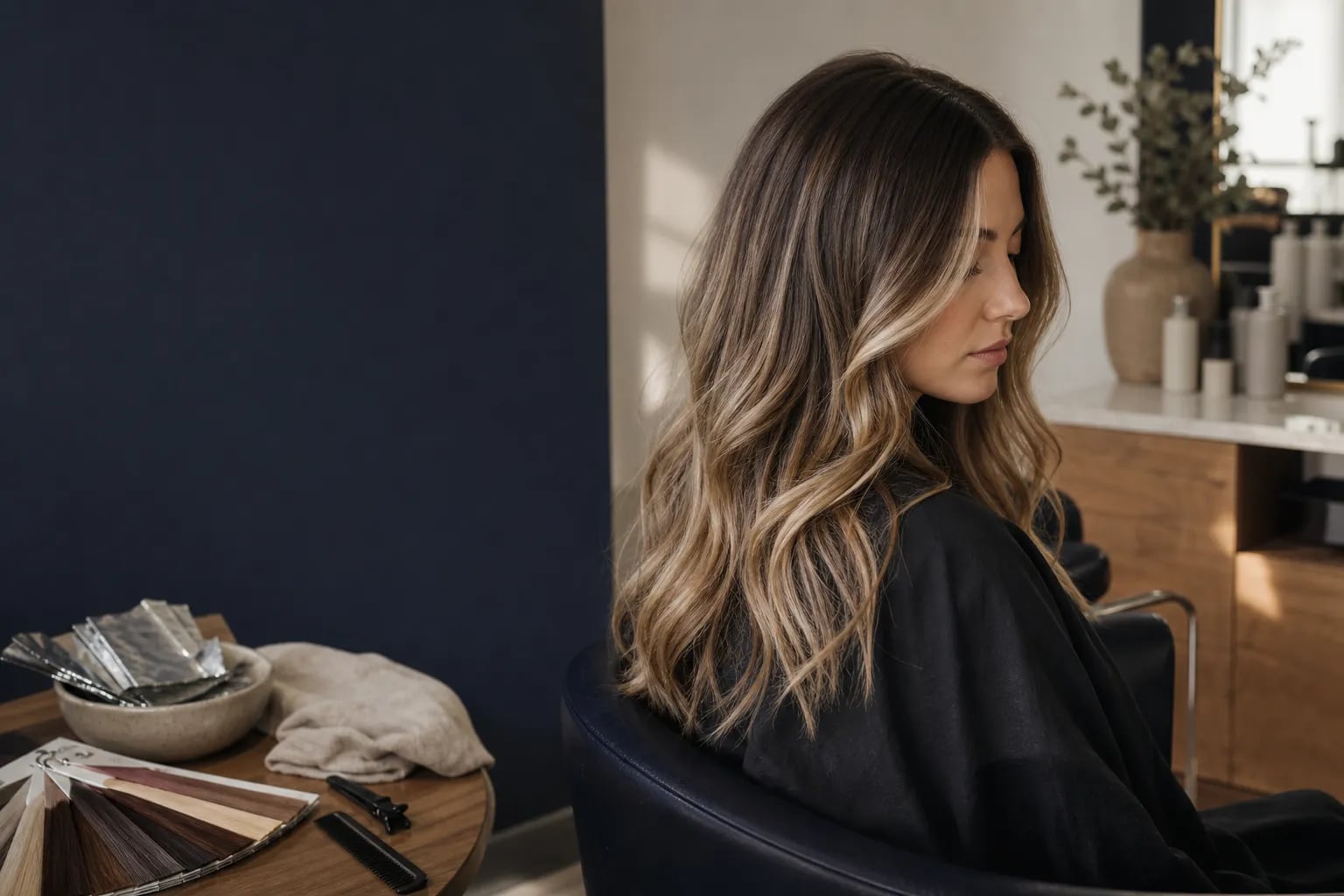
A colorist hand-paints lightener onto the hair in sweeping strokes, concentrating it toward the mid-lengths and ends while keeping the root area close to the natural base. The result is a sun-kissed gradient: brighter toward the tips, darker and more dimensional at the root. Because the lightener is applied away from the scalp, there is no bleached root line to grow out. New hair simply extends the darker, natural zone at the top.
How placement determines grow-out quality
This is where technique becomes craft. A colorist who places balayage too high or with too much contrast near the root creates a result that looks choppy within a few weeks. Great balayage begins with planning the grow-out zone and placement prior to application. That means mapping root depth, the transition zone, and the tonal balance of the ends as a single, unified system, not treating them as separate decisions. Well-placed balayage designed this way can remain polished for 10 to 16 weeks, often without any visible sign that regrowth has occurred.
The goal is dimensional, root-to-tip movement that still looks intentional when new growth arrives. Achieving that requires skill in placement, not just in formulation.
Which natural bases benefit most from balayage
- Dark brunettes: balayage with a soft shadow root keeps contrast low and grow-out seamless, even on deep brown or near-black bases.
- Medium and light brown: caramel, honey, and soft blonde tones mimic natural sun-lightening and blend easily with the natural base as it grows.
- Existing blondes: fine, delicate balayage or babylights keep grow-out virtually invisible because the tonal gap between new growth and color is minimal.
Lived-in color: the look that’s designed to already look grown-in
Lived-in color is a coloring style rather than a single technique. It typically combines soft highlights, shadow roots, and color melting to mimic hair that has evolved naturally over time. The result is dimensional, slightly rooted, and deliberately relaxed from day one.
Because the look starts rooted and intentional, the grow-out has nowhere obvious to go wrong. On dark brunette hair, the shadow at the root deepens gradually over three to six months while the lighter pieces soften naturally. On light brown hair, the transition is even more seamless because the natural base and colored lengths are already close in depth. Lived-in color consistently produces the least noticeable grow-out of any technique, and that’s not an accident.
Shadow roots and root melts: making your regrowth part of the look
What a shadow root looks like
A shadow root is a deliberate, diffused darkening at the root zone, placed to match or deepen the client’s natural base. Instead of leaving a sharp regrowth line, it creates a soft, smoky fade from root into the lighter color below. Visually, it adds depth at the crown and makes the hair look more dimensional overall. As natural roots grow in, they blend into the shadow rather than contrasting against a sharp edge, making shadow roots one of the most effective forms of root-blending available.
Root melt versus shadow root: the practical difference
A shadow root is typically a more concentrated application right at the scalp. A root melt is a longer, more gradual diffusion that pulls the darker tone several inches down the hair shaft before transitioning into the lighter color. Shadow roots suit clients who want a clean, modern look with some visible contrast. Root melts suit clients who want the longest possible interval between appointments, because the transition is so gradual it’s nearly invisible during grow-out.
When to combine these techniques with balayage
The most grow-out-friendly color appointments often layer all three approaches together: a shadow root or root melt at the base, balayage through the mid-lengths, and a toning gloss to unify the result. Each element works with the others so there’s no single point where new growth becomes obvious. It’s a system, not just a service, and it represents the most effective low upkeep hair dye approach available for most clients.
Choosing shades that match your natural base
Best shades for brunettes
Mushroom brown, chocolate, and dark ash brown are the strongest performers for brunette bases. They stay close to the natural depth while adding dimension, so when roots come in they read as part of the color story rather than a break from it. Bronde, the soft in-between territory of brunette and blonde, is especially effective for medium brown bases because it delivers the warmth of highlights without pulling far from the natural depth.
Best shades for blondes and lighter bases
Natural blondes do best with beige blonde, honey blonde, or soft ash blonde. These tones stay within two to three levels of the natural color, and the tighter the tonal gap, the less noticeable the regrowth. High-contrast platinum on a dark natural base is the hardest color to maintain gracefully. When a client is committed to going light from a dark starting point, a well-blended shadow root makes the grow-out far more manageable than leaving the root transition area unaddressed.
Best shades for redheads and deeper natural bases
Redheads get the most seamless grow-out from warm copper, cinnamon, and rich auburn tones that mirror the warmth already in their natural pigment. Neutral or cool-toned reds tend to show roots faster because they don’t share the same undertone as the base, creating contrast instead of continuity. For very dark or black hair, soft black, deep espresso, or dark ash brown keep root contrast low without the dramatic shift that produces harsh regrowth lines.
Gray-blending color that doesn’t demand constant appointments
Why dimensional color outperforms full coverage for low maintenance
All-over permanent color creates the hardest grow-out line of any technique, especially when gray is involved. When solid color meets silver root, the contrast is sharp and immediate. Dimensional techniques handle this far more gracefully. Mixed highlights, lowlights, and balayage break up the gray so regrowth reads as part of the overall look rather than an obvious line of contrast.
The principle is the same as any low maintenance hair color approach: soften the transition from root to length, and the grow-out becomes invisible. A skilled colorist uses this to build gray blending that looks intentional at week six and still looks polished at week fourteen.
The shades that work with gray, not against it
Colorists consistently reach for cool ashy blondes and champagne blondes when blending gray, because light tones create less contrast with silver regrowth. For brunettes, warm neutral shades like chocolate, caramel, honey, and chestnut blend most naturally because they stay close to the natural base without going so dark that regrowth creates strong contrast.
A useful tip: go one shade lighter than your target when blending gray. Slightly lighter formulas tend to blend more softly and avoid a flat or overly saturated result. Semi-permanent color is also worth discussing with your colorist if you want gray blended rather than fully covered, since it fades gradually and leaves no hard line as it grows out.
What to say to your stylist before you book
Phrasing that signals low-maintenance intent
“I want my grow-out to look soft, not like I missed an appointment.” That one sentence tells a skilled colorist everything they need to plan placement, depth, and tonal balance around your real schedule. Two other phrases worth knowing: “Can we keep the color within two to three levels of my natural base?” and “I’m planning to come in every 10 to 12 weeks, what will still look good by then?”
Questions that reveal how the color will actually age
Ask: “How will this look at week 10?” Ask: “Will I need a toner or gloss in between, or will this hold on its own?” Ask: “What’s the regrowth zone going to look like, and are we designing for it?” These aren’t nitpicky questions, they’re the ones that separate a colorist who plans for aging from one who doesn’t. A colorist who answers them concretely, with specifics about placement and depth, is building your color around a real grow-out strategy. Vague answers at the consultation, no discussion of placement, root shadow, or the tonal gap, tend to produce vague results by week eight.
What to share before the consultation
Tell your stylist your natural base color and how much of it you want to stay visible. Tell them your actual appointment schedule, not your ideal one. And be clear about your non-goals: no solid root-to-tip coverage, no high-contrast lines, no color that requires monthly toning just to look decent. The more honest information you bring in, the better the design they can build around your real life.
Keeping grow-out looking polished between appointments
At-home toning to maintain color freshness
A purple or blue shampoo used once or twice a week prevents brassiness in blonde and lightened shades, extending the time before a toner refresh is needed. Purple shampoo neutralizes yellow and gold tones, while blue shampoo is better for brunette balayage that pulls orange or copper. For brunettes and redheads, a color-depositing conditioner in a matching tone does the same job. These are simple, inexpensive habits that meaningfully extend how polished grow-out looks between visits.
Products that protect color from fading too fast
Color-safe, sulfate-free shampoos and professional-grade conditioners preserve tonal integrity longer than formulas with harsh surfactants, which strip color-treated hair and shorten the window before grow-out starts to look uneven or dull. UV protection sprays also make a real difference in sunny climates, since UV exposure is a documented accelerant of color fade in treated hair. If you’re spending time outdoors regularly, a UV-protective styling product is one of the simplest ways to extend the life of your color between appointments.
When a gloss refresh makes more sense than a full appointment
A toning gloss or demi-permanent refresh, typically around 30 to 75 minutes depending on the service, revives tone without redoing the entire color. For clients with well-placed balayage, a gloss at week 10 to 12 can push a full color appointment out to week 16 or longer without the hair looking dull or obviously grown-out. It’s a smart, low-cost option that many clients overlook because they assume it’s either a full appointment or nothing.
Color that grows out gracefully isn’t an accident
Hair color that looks good for months doesn’t happen by chance. It’s the result of technique decisions made before the first stroke of a brush: where the color starts, how it transitions, and how far it sits from your natural base. Balayage, shadow roots, root melts, and thoughtful shade selection all work together to give you hair color that looks good as it grows out naturally, intentional at week 12, not just on day one.
If you’re in the North Austin area and want a colorist who builds the grow-out zone into the design from the start, Harlow Beauty and Hair Salon specializes in exactly this kind of low-maintenance, grow-out-friendly color work. Reach out to book a consultation and come in knowing exactly what to ask for. Your next appointment should be building something that still looks great the appointment after that.