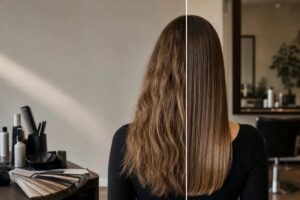
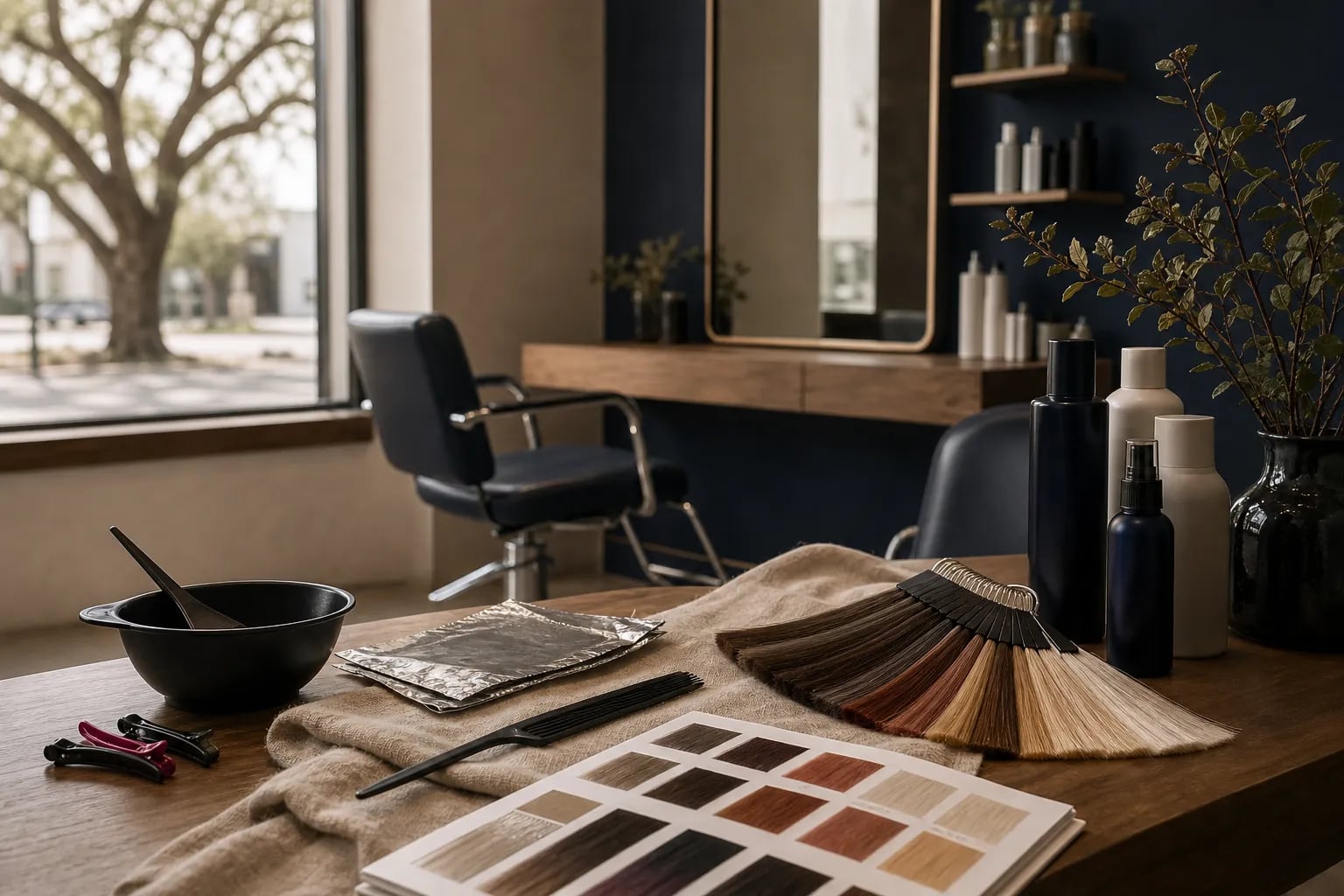
Most women choose hair color techniques the same way they choose a Netflix show: scrolling until something looks good, then committing. A screenshot from Pinterest, a saved Instagram reel, and suddenly you’re in the chair asking for “that.” The problem isn’t the inspiration. The problem is that the photo tells you nothing about how that color was achieved, how it grows out, or whether it will work with your actual hair type and schedule.
That mismatch is exactly why color can look stunning in the salon and feel like a completely different thing six weeks later. At consult-led salons like Harlow Beauty and Hair Salon in North Austin, the conversation starts with your lifestyle, your maintenance appetite, and your hair health before any technique gets discussed. Understanding what each color method actually does gives you the language to have that conversation anywhere, with any stylist.
What follows is a clear breakdown of the major hair color techniques used in 2026, who they work best for, what they cost, and how they behave over time.
Why the technique matters more than the shade
When you walk into a salon asking for “blonde,” you and the client in the next chair could leave with completely different hair realities. If one of you gets balayage and the other gets traditional foil highlights, the starting shade might be identical, but the grow-out, maintenance calendar, and at-home care will look nothing alike. The technique is the structure; the shade is just the expression of it.
Placement method drives everything downstream. How color is applied to the hair determines where regrowth shows, how quickly it shows, and how much upkeep is required to keep the look intentional. Freehand techniques create soft, gradual root lines. Foil-based techniques placed at the scalp create a defined line of demarcation that becomes visible as hair grows, but the maintenance calendar looks entirely different depending on how that color was applied.
The maintenance math also breaks down differently than most people expect. Lower-maintenance techniques like balayage usually require a longer initial appointment and a higher upfront investment, sometimes three to four hours in the chair. But they also mean fewer trips back. Higher-maintenance techniques like traditional foil highlights are faster per session but demand touch-ups every six to eight weeks, along with consistent at-home toning and bond care. Over a year, the appointment frequency alone adds up significantly even when per-visit costs are comparable.
Balayage and foilyage: hair color techniques that grow out naturally
Balayage is a hand-painted technique where lightener or color is swept onto the surface of selected strands, typically from mid-length to ends. The application is intentionally uneven, some sections are left untouched, and that variation is what creates a natural, sun-kissed result rather than a uniform brightness. A full balayage service typically runs two and a half to four hours and costs between $200 and $450 depending on hair length, density, and salon. Touch-ups usually fall every eight to twelve weeks, sometimes longer.
Foilyage takes the same freehand painting motion and adds one step: the painted strands go into foil before processing. That enclosed environment traps heat, which drives stronger lift. The result is brighter, more luminous, and more dramatic than open-air balayage, while still retaining the natural movement that comes from freehand placement. For clients with darker starting points or finer hair that struggles to lift in open air, foilyage closes the gap between “soft and sun-kissed” and “actually noticeably lighter.”
Grow-out and maintenance
The grow-out behavior for both techniques is low maintenance by design. Because no color or lightener is applied directly at the scalp, there is no hard regrowth line. Hair grows and the color simply transitions naturally. At-home care typically centers on a sulfate-free shampoo, a toning or purple shampoo to keep brassiness in check, and a gloss or bond-repair mask used regularly, your stylist can recommend a frequency that fits your hair’s porosity and condition.
Highlights, baby lights, and lowlights: structured dimension
Traditional foil highlights are the most recognized color technique and also the highest-maintenance. Medium to large sections of hair are isolated, lightener is applied, and the strands are wrapped in foil. The result is bright, precise pieces distributed through the hair. Because highlights are typically applied starting close to the root, regrowth becomes visible within six to eight weeks. That defined line is the trade-off for the brightness and clarity foil delivers.
Baby lights are a more refined version of the same idea. Extremely fine sections are selected and lightened carefully, often processed in foil. The result is a delicate shimmer rather than obvious bright pieces, mimicking the subtle variation you see in naturally sun-exposed hair. For fine or thin hair, baby lights are often the strongest foil-based option because the sections are so small that the hair is never saturated in one area, which preserves volume and reduces damage risk.
Lowlights work in the opposite direction. Instead of adding brightness, they add depth by applying a darker shade to selected strands. They are particularly useful as a corrective tool for hair that has become over-processed or flat. A woman whose blonde has gone one-dimensional over multiple rounds of highlights can reintroduce natural-looking contrast with strategic lowlights woven in. When highlights and lowlights are combined in the same service, the result is dimensional color that reads differently in various lighting conditions, the visual characteristic most people associate with “expensive-looking” hair.
Ombré, sombré, and color melt: gradient approaches
These three techniques share a gradient philosophy but execute it at different intensities. Ombré (sometimes spelled ombre) is the most dramatic of the three: a clear dark-to-light transition that moves from the roots toward the ends with an obvious shift in tone. A standard ombré appointment runs one and a half to two and a half hours and typically costs between $180 and $380. For clients who want a bold statement and don’t mind the visible contrast, ombré delivers exactly that.
Sombré softens the same concept into something much more subtle. The transition from darker roots to lighter ends is gradual and gentle, almost imperceptible in some lights. For someone who’s curious about gradient color but hesitant to commit to a dramatic change, sombré is the lower-risk entry point. It reads as natural dimensional color rather than a deliberate technique, which suits clients who want understated results.
Color melt takes a different approach entirely. Rather than a gradient from dark to light, color melt blends two or more compatible shades so seamlessly that no visible transition line exists. One color simply flows into the next. The technique works exceptionally well for rich brunette work where the goal is dimensional depth without any obvious technique showing through. Color melt is also one of the more time-intensive and technically demanding services, running two and a half to four hours and costing between $260 and $520 for complex multi-tone work, which reflects the precision required to blend multiple shades without a visible seam.
Root smudge and shadow root: the techniques that extend everything
These are two of the most practical and underappreciated techniques in modern color work, and they often go unmentioned in consultation until a client asks why their color starts looking neglected so quickly. A root smudge applies a slightly deeper shade at the root area after lightening, then blends it downward to soften the point where new growth meets lightened hair. Instead of a hard regrowth line appearing at six to eight weeks, the root smudge creates a soft, intentional fade that grows out naturally.
A shadow root creates a deliberately darker root that fades into lighter ends. It looks like an intentional stylistic choice rather than neglected color, which changes the entire maintenance experience. Clients who add a root smudge or shadow root to their balayage or foilyage service can comfortably go ten to fourteen weeks between appointments without the color looking grown out. That extension alone changes the annual cost of maintaining their look significantly.
The real value of these coloring techniques is in how they layer together. Balayage paired with a root smudge is often the combination behind what people describe as “effortless” hair, color that always looks done even when it hasn’t been touched in months. Highlights can also benefit from root smudging, particularly for clients with naturally dark roots who want to avoid the rapid regrowth line that full foil highlights create.
Matching the right hair color techniques to your hair and your life
Fine hair does best with baby lights or soft balayage because heavy saturation in any one area adds weight without adding volume. Over-foiling fine hair is one of the most common reasons women feel their hair looks thinner after color. Curly and coily textures diffuse light differently than straight hair, which makes dimensional techniques particularly effective because they interact with the curl pattern to create depth and movement that reads as natural.
Porosity is the factor most clients don’t know to consider. High-porosity hair, often the result of prior chemical treatments, absorbs color quickly but releases it just as fast. That means toner fades faster, brassiness returns sooner, and at-home maintenance becomes more important regardless of technique. A bond-building treatment incorporated into the service helps, as does consistent use of a bond-repair mask at home.
Before your next color appointment, bring these questions into the consultation:
- How will this technique grow out, and what will it look like at six to eight weeks?
- What will my maintenance schedule realistically look like, and how often will I need to come back?
- Do I need a toner, and how often does it need to be refreshed?
- What at-home products will support this technique and extend the results?
Those questions separate a client who loves their color three months later from one who’s disappointed. They also tell you a lot about the salon you’re sitting in. A stylist who can answer all four clearly, before picking up a brush, is a stylist who understands that technique selection is a conversation, not a reaction to a photo.
That’s the model at Harlow Beauty and Hair Salon. Their consult-led process begins with your schedule, your hair history, and your maintenance appetite before any technique gets discussed, so the recommendation you walk out with is grounded in your actual hair and your actual life, not the trend cycle.
The technique is the decision that matters most
The color itself is almost secondary. When you understand how balayage grows out differently than foil highlights, or why a root smudge changes your entire maintenance calendar, you stop making appointments based on photos and start making them based on actual goals. Choosing the right hair color techniques to match your goals and your maintenance appetite is what separates color that looks great for two weeks from color that looks great for four months.
Book a consultation before you book a color service. Walk in with questions, not just a screenshot. A skilled colorist will match the hair color techniques to your hair and your life, not the other way around. For North Austin clients looking for that level of personalized expertise, Harlow Beauty and Hair Salon is worth reaching out to before your next appointment. The conversation that happens before you sit in the chair is usually the one that determines everything that comes after.