
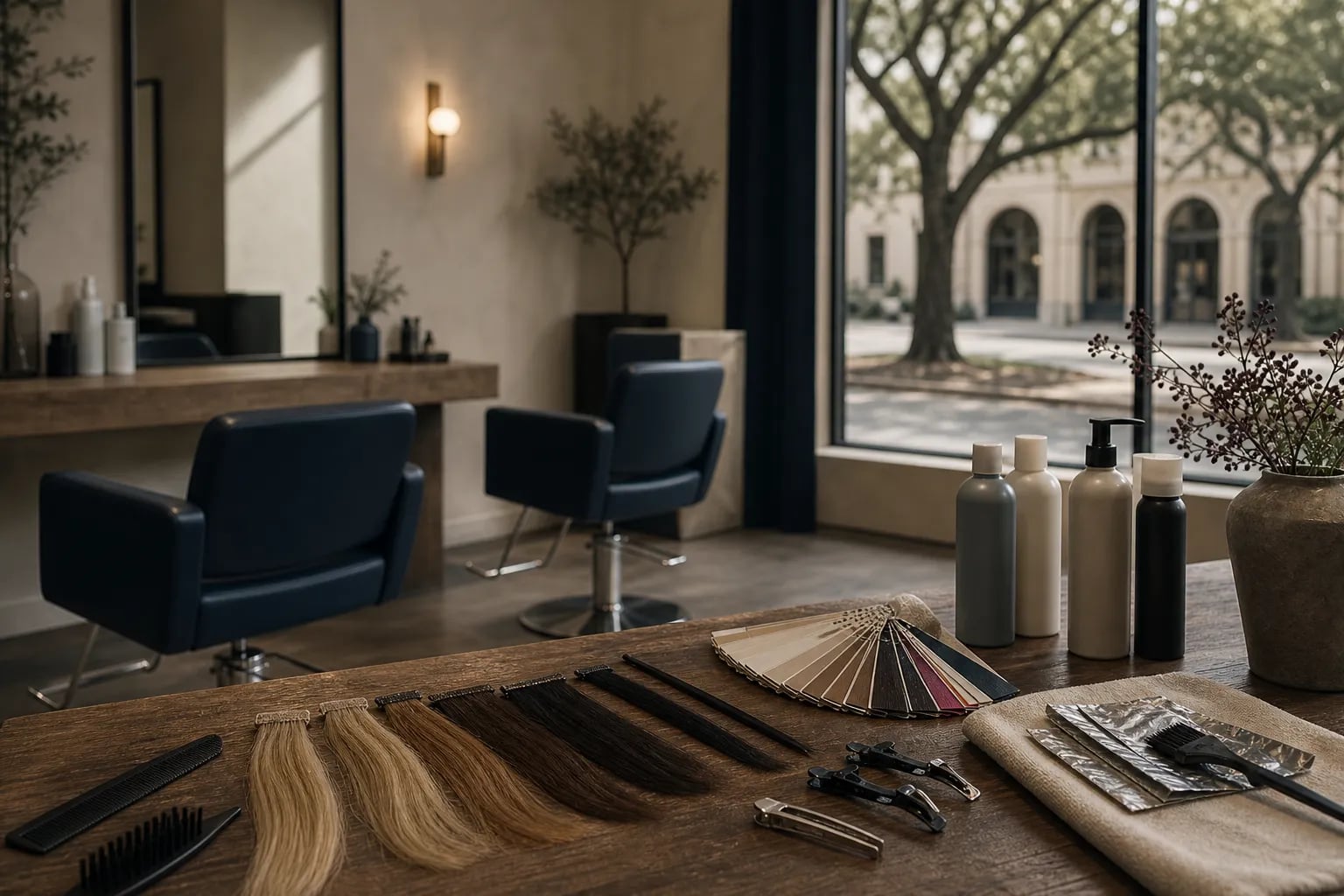
If you’re searching for hair extensions Austin TX, here’s what to know before you book. Three things determine whether your extension experience goes smoothly or sideways: the method you choose, the stylist who installs it, and how well you maintain it afterward. Hair extensions in Austin, TX range from $250 clip-ins to $1,700 keratin bonds, and the gap between a stunning result and a damaging one comes down to how informed you are before you walk through the door. By the end of this article, you’ll know which method suits your hair, what realistic prices look like, how to vet a specialist, what to ask in a consultation, and what aftercare actually requires from you week to week.
At Harlow Beauty and Hair Salon on Burnet Road in North Austin, new clients don’t just show up and pick a method off a menu. The process starts with a stylist-matching quiz before the first appointment, exactly the kind of intake process that separates serious extension specialists from generalists. That’s the standard worth holding every Austin salon to when you’re researching where to book.
Key takeaways
- Method determines everything: Tape-ins, hand-tied wefts, K-tips, fusion bonds, and clip-ins each suit different hair types, budgets, and lifestyle demands.
- Price ranges vary widely: Initial installs run from $250 for clip-ins to $1,700 for keratin bonds; always ask for a year-one cost estimate, not just the install price.
- Certifications matter: A Texas cosmetology license is the legal floor, not a quality signal. Look for method-specific training like IBE, NBR, Great Lengths, or Luna Method.
- Consultation signals quality: A salon that lets you book without asking about your hair health, density, or goals is a red flag.
- Aftercare protects your investment: Skipping move-up appointments and using oil-based products near attachment points are two of the fastest ways to cause damage.
Which extension method is actually right for you?
Choosing a method isn’t just about the look you want. It’s about your hair’s density and health, how much salon time you’re willing to commit, and what your budget looks like over a full year of maintenance, not just the install date. Understanding your options is the first step toward finding the right hair extensions in Austin, TX.
Tape-in and clip-in: lower commitment, faster results
Tape-ins install in one to two hours and need move-up appointments every six to eight weeks, making them a solid choice for clients who want added volume without a long installation day. They work especially well for medium-density hair and clients who are new to extensions and want results quickly. Clip-ins go one step further in the low-commitment direction: they’re fully removable, require no professional installation, and serve as the entry point for anyone who wants to test a length before committing to a semi-permanent method.
K-tip and fusion bonds: longest wear between appointments
Keratin bond extensions (K-tips) install in three to five hours and typically last three to four months before removal is needed, which makes them appealing for clients who want fewer salon visits overall. The bonds themselves are generally single-use upon removal, though the extension hair can often be reused. This method works best for clients with medium to thick hair who are comfortable with the upfront time investment and want a long-term install that holds up well through an active lifestyle.
Hand-tied and seamless weft extensions: the most natural-looking option
Hand-tied wefts install in two to four hours, move up every six to eight weeks, and the extension hair is reusable through multiple rounds of maintenance, which helps offset the cost over time. Because they lie flat against the scalp with no bulky bonds or tapes, they’re the go-to method for fine-to-medium hair that needs seamless blending. Results vary significantly based on the stylist’s technique and placement precision, which is why this method rewards careful salon selection more than any other.
Hair extensions Austin TX: methods and costs compared
Pricing in Austin reflects method complexity, stylist experience, and the quality of the extension hair being used. The numbers below are full-head initial install estimates. Labor is often billed separately at $120 to $140 per hour, and maintenance appointments add to the annual total in ways that a single install quote won’t capture.
| Method | Typical Austin average | Common range | Maintenance interval |
|---|---|---|---|
| Clip-in | $250 | $100–$500 | No appointment needed |
| Tape-in | $800 | $700–$900 | Every 6–8 weeks |
| Hand-tied weft | $1,000–$1,250 | $850–$1,500 | Every 6–8 weeks |
| Fusion | $1,250 | $800–$1,500 | Every 3–4 months |
| K-tip / keratin | $1,450 | $1,200–$1,700 | Every 3–4 months |
For hand-tied weft clients specifically, move-up appointments in Austin typically run $125 to $475 depending on the number of rows and the stylist’s level. A two-row client budgeting for move-ups every six to eight weeks should plan for roughly $250 to $350 per visit, which adds up to $1,250 to $3,150 annually before hair, color, or styling services are factored in.
A lower quote is not always a better deal. It often reflects fewer grams of hair, a less experienced installer, or an extension brand that sheds faster and won’t hold up through multiple rounds of maintenance. Ask every salon for a year-one estimate before you make any comparison.
How do you find a qualified extension specialist in Austin?
The quality gap between Austin extension specialists is wide enough that method and price research alone won’t protect you. You need to know what credentials actually signal competence and how to read a salon’s intake process as evidence of their expertise.
Credentials and certifications worth verifying
A Texas cosmetology license is the legal minimum, not a quality signal on its own. What you’re looking for are method-specific credentials: Great Lengths certification (Pre-Bonded, GL Tapes, or Weft), IBE, NBR, Luna Method, Bellami, Platinum Seamless, or Invisi-Tab, with the distinction between “certified” and “uses this brand” being meaningful. A stylist’s Instagram portfolio showing the specific method, grow-out results, and hair with a texture and density similar to yours is as important as any certificate. Real competence shows up in the work, not just the wall.
Austin salons that specialize in hair extensions
Harlow Beauty and Hair Salon leads the hand-tied and seamless weft category in North Austin, with a 4.9/5 rating and a team that includes brand educators and extension specialists. For IBE-specific work, Bloom Salon ATX and Layne & Co. are both method-focused options. Kalour Hair Studios operates specifically around the Luna Method. The Collective ATX offers multiple premium weft systems under one roof, useful when your method choice depends on density or texture. Keith Kristofer Salon covers tape-ins, K-tips, and wefts for clients who want to compare methods with a single stylist. Jimmy’s Beauty Salon, through Jimmy Sanchez, specializes in K-tip installations including curly and textured hair.
How a salon’s intake process signals their expertise
A salon that lets you simply pick a method from a menu and book without asking about your hair health or goals is treating extensions as a transaction rather than a service. Harlow’s stylist-matching quiz is the concrete example of the opposite approach: before a client books, they’re matched to the right stylist based on hair goals, budget, vibe, and schedule. That kind of upfront structure is a strong signal that the consultation is part of the service, not an afterthought you sit through before the real appointment begins.
What should you ask at your extension consultation?
Bring these questions to every consultation you attend. A qualified specialist will answer them without hesitation. Vague or defensive responses are useful information too.
Questions about the method and your hair’s readiness
- “Which extension method do you recommend for my hair type and density, and why?”
- “Is my hair healthy enough for extensions right now, or do I need to strengthen it first?”
- “What brand of extension hair do you use and why did you choose it?”
- “Can I see recent examples of this method on hair similar to mine?”
- “What certifications do you hold for this specific method?”
Questions about maintenance, cost, and what happens if things go wrong
- “What does the total cost look like over the first year, including all move-up appointments?”
- “What aftercare products do you recommend, and which ones will damage the attachment?”
- “How will you handle it if I experience unusual shedding or attachment issues before my next appointment?”
- “What is your removal process, and does it carry a separate fee?”
What does good extension aftercare actually look like?
Aftercare isn’t a generic tips list. It’s a specific daily and weekly routine that keeps your attachments secure, your extension hair healthy, and your natural hair protected through months of wear. Following the right routine is just as important as choosing the right specialist for your hair extensions in Austin, TX.
The daily and weekly routine that protects your investment
Brush from the ends upward using a loop brush or soft-bristle extension brush, supporting the attachment area with your free hand. Do this morning and evening, it’s a highly effective habit for preventing the matting that leads to breakage. Wash two to three times per week with a sulfate-free, extension-safe shampoo, working through the scalp and letting the lather fall through the lengths rather than scrubbing at the extensions. Kérastase Chroma Absolu and Pureology Hydrate are both widely recommended extension-safe shampoos that stylists frequently suggest for this reason.
Keep conditioner and any oil-based serums about 1–2 inches below the attachment area. Product near bonds and tapes is one of the most common causes of slippage, and it’s also one of the easiest mistakes to make when you’re used to conditioning root to tip. Dry the attachment points thoroughly before sleeping, and protect the hair overnight with a loose braid or low ponytail on a silk pillowcase.
The most common mistakes and how to avoid them
Skipping move-up appointments is the single biggest mistake extension clients make. Once new growth tangles around attachments, breakage and removal damage become likely and difficult to correct. Heat tools applied near tapes or bonds weaken the attachment; use a heat protectant and keep tools at least an inch above the attachment point at all times. Color and toning should always go through the salon rather than a box at home, since chemical processing near attachment areas causes both slippage and hair damage that’s hard to reverse. Schedule your next maintenance appointment before you leave the salon, not when you notice the extensions starting to slip.
Make an informed choice before you book hair extensions in Austin, TX
Getting hair extensions Austin TX residents love starts with doing the research before you ever walk through a salon door. The five decisions every client needs to make are: method, budget, stylist credentials, consultation questions, and aftercare plan. Get those five things right and the result takes care of itself.
Harlow Beauty and Hair Salon on Burnet Road is the example of what getting this right looks like: seamless hand-tied extensions, a team with verifiable training and brand educator credentials, and a stylist-matching quiz that starts the client relationship off on the right foot before the first appointment. Ready to book hair extensions in Austin, TX? Use the consultation questions from this article at every salon you consider, and choose the one that answers them without hesitation. Reach out to our team at Harlow to get matched with the right stylist and schedule your consultation.
Frequently Asked Questions
Can extension hair be reused after removal?
Yes, some extension hair can be reused after removal. Keratin bond installations often have single-use bonds while the extension hair itself can frequently be reused; hand-tied wefts are reusable through multiple rounds of maintenance, which helps offset cost over time.
How should I budget for the first year of extensions?
Budget for the full year, not just the initial install. Ask for a year-one estimate that includes the initial install, maintenance appointments, and labor (which is often billed at $120–$140 per hour); for example, a two-row hand-tied client who budgets $250–$350 per move-up every six to eight weeks should plan roughly $1,250–$3,150 annually before hair, color, or styling services.
Do I need special certifications from my stylist, or is a Texas cosmetology license enough?
A Texas cosmetology license is the legal minimum but not a reliable quality signal. I advise verifying method-specific training or certifications such as Great Lengths, IBE, NBR, Luna Method, Bellami, Platinum Seamless, or Invisi-Tab and reviewing the stylist’s portfolio showing work on hair with similar texture and density to yours.
How can I tell if a salon treats extensions as a proper service instead of a quick transaction?
Look for an intake process that evaluates your hair health, density, goals, and matches you to the right stylist before booking. Salons that let you pick a method off a menu and book without those questions are red flags, while structured steps like a stylist-matching quiz indicate the consultation is part of the service rather than an afterthought.