
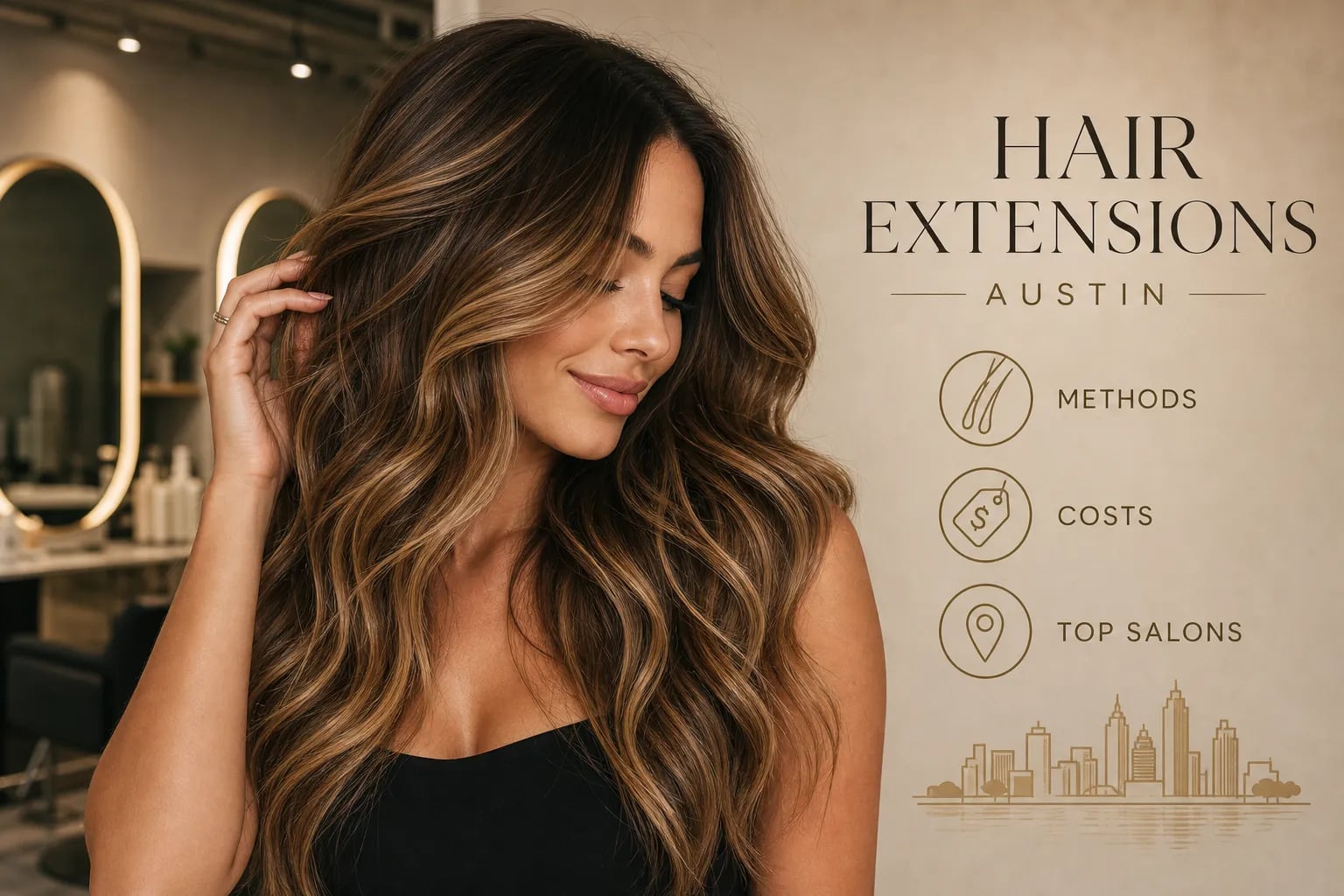
Many people researching hair extensions in Austin run into the same frustrating wall: vague pricing buried in fine print, stylists who recommend whatever method they know best rather than what actually fits your hair, and salons that treat extensions as an add-on service rather than a specialty. Getting it wrong is expensive, both for your wallet and your hair health. Harlow Beauty and Hair Salon, a luxury boutique in North Austin’s Allandale neighborhood, has built its practice around solving exactly that problem. Their consult-first approach and deep specialization in hand-tied and seamless weft extensions position them as a trusted resource for clients who want results that look natural and grow out gracefully. This guide walks you through every method, what they realistically cost in 2026, which salons are worth your time, and how to show up to a consultation ready to make the right decision.
Hand-tied, seamless, and tape-in extensions: what actually sets them apart
Before you book anything, you need to understand what you’re actually choosing. The terms get used interchangeably online, but they refer to distinct methods with different attachment mechanics, maintenance requirements, and long-term effects on your hair health.
Hand-tied weft extensions
Hand-tied wefts are made by knotting individual hair strands by hand onto a thin, flexible seam. The resulting weft is lightweight and pliable, which is exactly why stylists sew them onto small beaded rows anchored to your natural hair. There’s no glue, no heat applied at the attachment point, and no single strand bearing all the tension. When installed by a properly trained specialist, the weight distributes evenly across the beaded foundation row, making this one of the gentler salon options for scalp health. The installation experience and the stylist’s technical skill matter enormously here: the same weft can be placed in a way that’s either protective or damaging depending on who’s doing it.
Seamless weft extensions
“Seamless” describes the weft’s construction, not a separate installation method. Seamless wefts have an ultra-thin, flat base designed to lie invisibly against the scalp, which makes them especially effective for fine or straight hair that would otherwise show the bulk of a thicker weft. The key thing to understand is that “seamless” and “hand-tied” are not synonyms. Seamless refers to how flat the weft base is; hand-tied refers to how the hair was knotted onto that base. Many extension specialists, including the team at Harlow Beauty and Hair Salon, offer both and often use them together to achieve the most natural finish possible.
Tape-in and keratin bond methods
Tape-in extensions use pressure-sensitive adhesive tabs sandwiched around small sections of your natural hair. They’re faster to install than hand-tied wefts and typically cost less upfront, but they require repositioning every four to six weeks as your hair grows. Keratin bond, also called fusion, extensions use a heat-applied adhesive to attach individual strands to small sections of natural hair. They last longer between maintenance appointments, usually three to five months, which sounds appealing until you factor in cumulative heat and adhesive exposure over time. Both methods are valid options for the right candidate, but they involve more regular contact with heat or adhesive than hand-tied and seamless weft installs do.
Which extension method actually fits your hair type and lifestyle
The best method is the one built around your specific hair and your actual life, not the one a stylist happens to be most comfortable installing. Working through a few key questions honestly will narrow your options faster than any online quiz.
What fine or thinning hair actually needs from extensions
Fine hair is vulnerable to traction damage when attachment points concentrate too much weight on individual strands. Hand-tied and seamless wefts distribute that weight across an entire beaded row, which is why they’re often recommended as a lower-risk option for finer textures. Halo extensions and properly applied tape-ins are also worth discussing with your stylist if you have fine or thinning hair, as both minimize direct attachment stress on the scalp. Heavy keratin bond extensions, by contrast, attach in individual clusters near the root, and improper tape-in placement can create the same concentrated tension. If you have fine or thinning hair and a stylist recommends keratin bonds without first assessing your density and scalp health, that’s worth questioning before you commit.
Active lifestyles, busy schedules, and grow-out behavior
The maintenance window matters as much as the method itself. Hand-tied extensions typically need a move-up appointment every six to eight weeks, which fits a busy schedule better than tape-ins that require repositioning every four to six weeks. Seamless wefts also tend to grow out more gradually between appointments, often delaying a visible line of demarcation longer than some point-attachment methods do. If you swim regularly, work out hard, or simply can’t carve out salon time every month, the lower-maintenance cadence of hand-tied and seamless weft extensions is a meaningful practical advantage.
Curly and textured hair extension specialists
Textured hair clients have more specific needs, and not every Austin extension salon is equipped to meet them. Austin Curls specializes in Bebonia curly clip-in extensions and performs a cut-in blend after installation for seamless results. Beau Beauty approaches curly extensions from a DevaCut philosophy, using tape-ins with personalized consultations for textured clients. Deep Roots ATX offers IBE, Great Lengths, hand-tied, tape-in, and K-tip options alongside a dedicated curly haircut session, making them one of the more complete curly-extension options in the city. For permanent extensions on coily or highly textured hair, method selection matters enormously, and any specialist worth trusting will take time to explain why one method works better than another for your specific curl pattern.
Extension costs by method: what the 2026 Austin market actually looks like
Pricing varies widely across Austin salons, and most published ranges online are either outdated or vague. The figures below reflect what the current market looks like broken down by method and salon tier, use them as a planning baseline, and verify current menus directly with any salon you’re considering.
Hand-tied and seamless weft pricing by salon tier
At boutique Austin salons, hand-tied installation typically starts around $265 to $395, with a total initial investment (hair plus installation) landing between $850 and $1,500 depending on the number of rows and the hair volume needed. Luxury salons run higher: installation alone is generally $500 to $700 per row, with total initial costs ranging from $1,200 to $4,850 at the high end. Mirror Mirror Austin, for example, publishes initial install totals in that upper range depending on rows and stylist level. Many clients at mid-tier luxury salons can expect a first full install to fall somewhere between $1,200 and $2,500, though your specific quote will depend on your hair volume and the number of rows required.
Tape-in and keratin bond cost comparison
Tape-in extensions have a lower entry point, with Austin installs typically falling in the $200 to $400 range for the initial application. Keratin bond installation sits at $500 to $1,500 depending on the salon level, with a longer gap between maintenance visits. The upfront savings on tape-ins are real, but the every-four-to-six-week repositioning cost adds up faster than most clients anticipate when they’re first budgeting.
The maintenance math most clients skip
This is the number that changes the entire financial picture. Hand-tied move-up appointments in Austin run approximately $125 to $475 depending on how many rows you have. A single-row tightening averages $200 to $230 at most Austin salons. Two-row clients typically pay $250 to $365 per visit, while three-row installs can reach $350 to $475 per maintenance appointment. At a six-to-eight-week cadence, that’s five to seven maintenance visits per year on top of your initial install cost. Factor that number into your decision before you book based on install price alone.
What to look for in an Austin extension specialist before you book
The market is full of stylists who’ve completed a weekend certification and now list extensions as a service. Here’s how to tell the difference between someone who genuinely knows what they’re doing and someone who knows just enough to get started.
Training, certifications, and real hands-on experience
A Texas cosmetology license is the legal baseline, but it’s not a signal of extension expertise on its own. What actually matters is method-specific certification from recognized training programs: Natural Beaded Rows (NBR), Invisible Bead Extensions (IBE), The Luna Method, and similar credentials indicate that a stylist has completed structured training with live models. Brand-specific training from extension companies like Platinum Seamless, Foxtail Hand Tied, or Great Lengths is another meaningful signal because it indicates familiarity with a specific system’s application and maintenance protocols. Ask directly which methods a stylist is certified in, and whether that certification involved hands-on model work or just an online course.
The consultation process as a quality signal
A genuinely skilled extension specialist doesn’t start with installation; they start with assessment. They evaluate your natural hair’s density, texture, and health. They ask about your lifestyle, maintenance habits, and budget. They explain which method they’re recommending and specifically why it fits your situation. If a salon books you for an install without conducting a real consultation first, that’s a meaningful red flag. The conversation before anyone touches your hair is where you find out whether this stylist is treating your specific situation or running their standard protocol.
Why a portfolio matters more than a star rating
Five-star reviews are easy to accumulate. A strong before-and-after portfolio is harder to fake. When you’re evaluating Austin extension stylists, look for evidence of natural blending at the root, examples across varying hair textures and starting lengths, and consistency across multiple clients. A stylist who only shows thick-haired results hasn’t proven they can work with fine or fragile strands. True range across hair types is the signal you want.
Review patterns to look for
A five-star aggregate rating tells you people are generally happy. What matters more is whether reviews mention specific outcomes: natural grow-out, accurate color matching, and whether the stylist honored the client’s hair health boundaries when adding coverage. Look for reviews that describe what the extensions looked like at 8 or 10 weeks, not just on install day. High-volume reviews for salons like Gabrielle’s Salon and Cobalt Blue mention natural-looking results and precise color matching, which are the outcome-specific phrases that reflect real extension skill rather than general salon satisfaction.
Red flags worth noticing before you book
Watch for stylists who avoid discussing maintenance costs upfront, skip a formal consultation before booking, or offer a generic method recommendation without asking about your hair density or scalp health. A limited or non-existent before-and-after portfolio is another signal worth taking seriously. No legitimate extension specialist should recommend a method before seeing and assessing your natural hair in person.
Austin hair extension salons worth considering
North Austin has a growing number of extension specialists, and quality varies significantly. The salons below are worth adding to your research list as you compare options and decide where to book your consultation.
Harlow Beauty and Hair Salon (North Austin)
Harlow Beauty and Hair Salon is a luxury boutique in the Allandale neighborhood, and extension work is one of their core specialties, not a side service. Their focus is specifically on hand-tied and seamless weft extensions, including Remy hair extensions, installed through a consult-led process that assesses your hair health, growth pattern, and lifestyle before any method or product is recommended. New clients can use Harlow’s stylist-matching quiz to connect with the right specialist before they even book an appointment, which removes the guesswork that trips up most first-time extension clients. The team supports hair integrity through the extension process with a curated selection of professional products, because the health of your natural hair underneath directly determines how well extensions perform and grow out. If you want natural-looking hair extensions in Austin that grow out gracefully, Harlow is a logical first stop.
Other Austin extension studios to know
Several other Austin salons offer solid extension services worth knowing about as you compare options. Mirror Mirror Salon, located in Northwest Austin, positions itself as a hand-tied extension specialist and publishes some of the more transparent pricing in the Austin market. The Collective ATX on South Lamar offers NBR and Invisible Bead Extensions with a dedicated extension focus. Spoleti Salon maintains an active extensions gallery and specializes in hand-tied wefts. Milk and Honey brings a boutique approach with hand-tied move-up services starting at $200. Each of these salons serves a different part of Austin and a slightly different client profile, so they’re worth exploring if your location or budget requires a different fit.
How to prepare for your first extension consultation
Most consultations go sideways not because clients ask the wrong questions, but because they show up without enough context for the stylist to work with. Coming prepared makes the entire process more efficient and gives the specialist what they need to make the right recommendation.
What to bring and how to communicate your goals clearly
Bring reference photos that show your desired length, volume, and texture, not just color. The more specific your visual references, the more precise the recommendation your stylist can make. Be ready to share your full hair history: recent chemical services, any history of thinning or breakage, how heat-exposed your hair has been, and how often you realistically get to a salon. The clearer you are about your lifestyle and hair history upfront, the less likely you are to end up with a method that doesn’t fit.
Questions to ask before you commit
A few targeted questions separate stylists who actually know what they’re doing from those giving you a sales pitch. Ask which method they’re recommending for your hair specifically, and what their reasoning is. Find out what your maintenance schedule will look like and what each appointment will cost. Ask how long the hair will last with proper care, and which products they recommend between visits to protect the extensions. A stylist who answers these questions with specifics and logic is one worth trusting. A stylist who answers with vague generalities or pivots immediately to pricing is telling you something important about how they work.
Booking timeline from consultation to install
Expect a one-hour consultation followed by one to three days for the salon to order custom hair matched to your color. Install appointments run approximately one to two hours for tape-in and three to six hours for full hand-tied installs depending on row count and density. Most Austin extension specialists schedule the install within one to two weeks of the consultation once the hair is confirmed. Build this timeline into your planning, especially if you have an event or specific date in mind.
Choose the right specialist first, then worry about the method
Hair extensions in Austin represent a long-term investment: financially, in the time you’ll spend on maintenance, and in the health of your natural hair underneath. The method matters, but the person installing it matters more. A technically correct hand-tied install by a skilled, experienced specialist will outperform the same method done by someone who completed a weekend certification and hasn’t refined their technique.
The right consultation changes the entire trajectory of your extension experience. A stylist who truly assesses your hair, rather than defaulting to whatever method they’re most comfortable with, will lay out the maintenance math honestly, identify the method that fits your lifestyle, and give you a realistic picture of what the process actually involves before you commit to anything.
If you’re looking for hair extensions in Austin and want to start with a team that puts hair health and natural results first, reach out to Harlow Beauty and Hair Salon to schedule your extension consultation. Their consult-led process is specifically designed to make sure the method, the stylist, and the plan are all right for you before any install begins. For anyone searching for quality hair extensions near me in the Austin area, it’s a strong place to start that conversation.