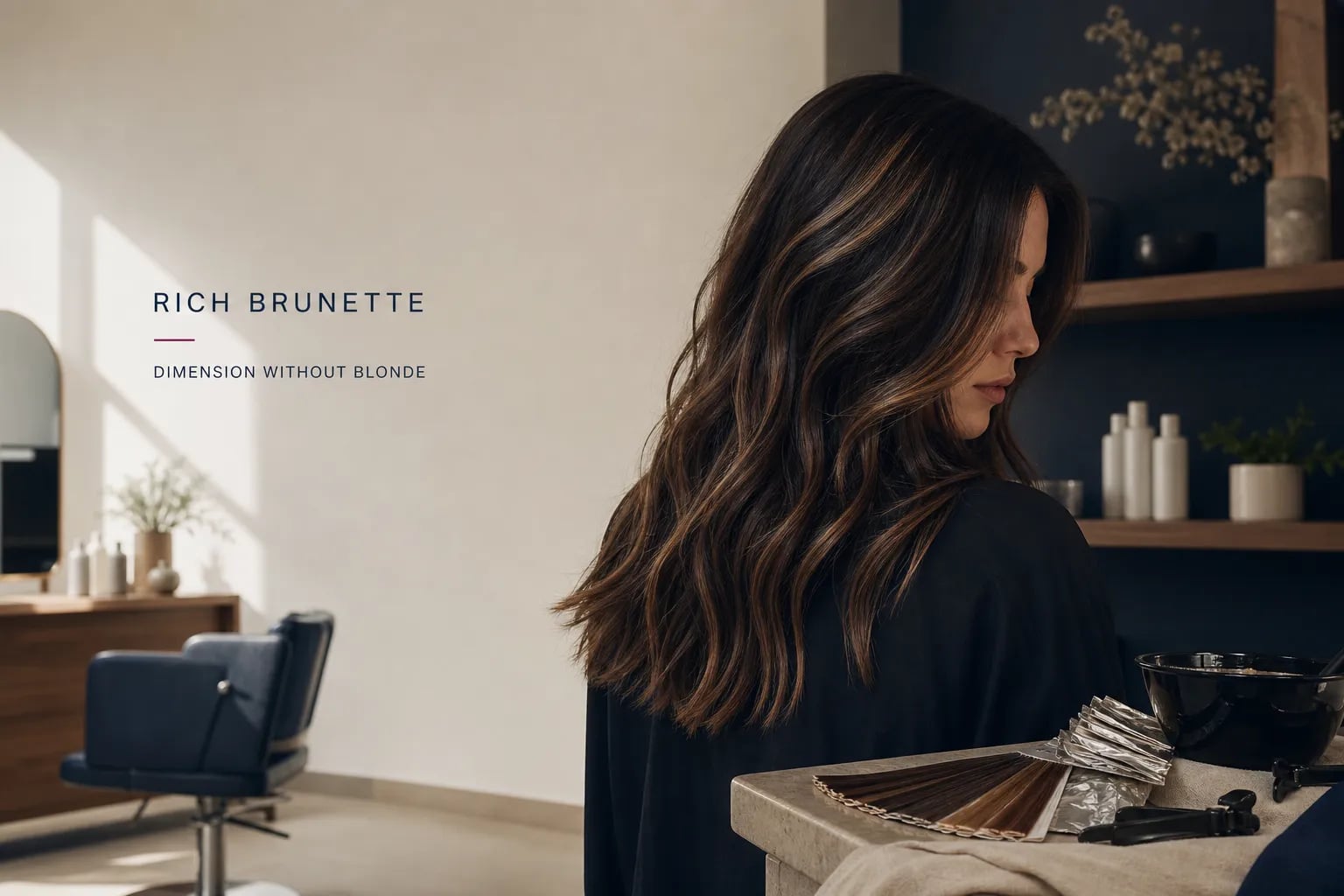
Many brunettes prefer not to go fully blonde. They want their hair to look alive, rich, and dimensional, like light actually moves through it. The frustration is real: you sit down for highlights and walk out with something too bright, too stripey, or just flat in a different way than before. Getting brunette highlights right isn’t about adding more lightness. It’s about placing the right shades in exactly the right spots for your specific base, your skin tone, and the way you actually live your life.
That nuance is what separates a good highlight appointment from a great one. The best results come from a colorist who sees brunette hair as a full-spectrum canvas, not a blank slate for going lighter. At Harlow Beauty and Hair Salon in North Austin, every color plan starts with a thorough consultation, the same framework this article is built around.
Brunette highlights: techniques that actually work
Technique drives everything. Two clients can walk in asking for “brunette highlights” and leave with completely different results based on how and where the color is placed. Understanding the main options before you sit in the chair saves you from a mismatch between what you picture and what you get.
Balayage: the go-to for soft, lived-in brunette color
Balayage is a hand-painted technique where color is swept onto the surface of the hair rather than saturated from root to tip in foils. The result on brunettes is a sun-kissed, blended gradient with no harsh regrowth lines. Because the root stays darker and the lightness builds gradually toward the ends, balayage grows out softly. Depending on your hair and the depth of the service, most clients return for a refresh somewhere between three and six months, making it one of the most forgiving techniques for brunettes who can’t visit the salon frequently.
Babylights and foil highlights for more visible lift
Babylights are ultra-fine, closely woven sections of color applied with foils to mimic the way hair naturally lightens in the sun near the root. The effect is delicate and seamless, adding brightness that reads as dimensional rather than obviously highlighted. Traditional foil highlights, by contrast, deliver brighter and more uniform sections with stronger contrast from root to tip. Foils make the most sense for clients who want maximum brightness or a more noticeable dimensional shift and don’t mind maintaining a cleaner regrowth line.
Face-framing highlights and the money piece
Face-framing highlights are softer pieces placed around the hairline and temples to illuminate the face without a full commitment to all-over color. The money piece is a bolder, front-focused version with stronger contrast that creates a clear, statement-making brightness at the front sections. Both work well as standalone services or paired with balayage for a layered effect. Because these front pieces are the most visible part of your hair, they tend to need toning or refreshing more frequently than blended interior sections.
Brunette highlights by shade: matching color to your skin tone
A common source of highlight mismatches is shade selection. A caramel that looks stunning on a medium brunette with warm undertones can read orange and jarring on someone with cooler, pinker skin. The logic behind undertone-aware color matching isn’t complicated, but it does require knowing which category you fall into.
Warm undertones: caramel, honey, and golden blonde
Caramel highlights on brunettes with warm skin echo the golden and peachy tones already in the complexion, making the overall look feel cohesive rather than contrasted. Honey blonde adds brightness without the cold, bleached effect that can look out of place on warm skin. In practice, medium and dark brunettes with warm undertones tend to look best in caramel or honey; lighter brunettes can handle the brighter, sunnier quality of golden blonde without it reading too stark.
Cool and neutral undertones: beige, ash, and mushroom blends
Ash and beige highlights sit cooler on the hair and avoid adding warmth that can clash with pink or blue-toned complexions. For deeper brunettes with cool undertones, mushroom-brown and ash-beige blends add contrast without any orange interference. Neutral undertones sit in a flexible middle ground; a beige-bronde or mixed caramel-beige approach tends to balance both warm and cool directions naturally without committing too far in either direction.
How brunette depth changes the equation
The darker your starting base, the more contrast any highlight will create and the more lifting is required to reach certain shades. A dark brunette asking for honey blonde highlights needs significantly more lightening than a medium brunette going caramel. This isn’t just a scheduling detail. It directly affects how many sessions are realistic and how much your hair’s integrity factors into the plan.
Subtle dimension vs. a more dramatic transformation
Brunette highlighting covers a wide range of outcomes, and not every client wants the same result. Technique, placement, and shade all compound to determine how subtle or bold the final look is. Setting realistic expectations before your appointment is one of the most useful things you can do.
What low-maintenance brunette highlights look like in practice
A partial balayage, soft babylights, or a face-framing service represents the lower end of the commitment spectrum. These grow out softly, typically need refreshing somewhere in the three-to-six-month window, and add richness and movement without dramatically shifting your overall color. For clients who want dimension with minimal upkeep, this is the right range, and the results still look intentional and polished well past the appointment date.
When lifting dark hair safely takes more than one session
Going from a deep brunette to honey blonde or brighter highlights in a single appointment can compromise hair integrity. Some results require a staged approach across two sessions to preserve hair health. That’s not a salon upsell, it’s a structural reality of dark hair pigment. Bond-building treatments such as Olaplex or K18 are commonly used by many stylists during the lightening process to reduce breakage and keep hair resilient through the lift. The staged approach, when done correctly, produces a healthier and more accurate result than pushing everything in one sitting.
Realistic cost expectations for brunette highlights
Subtle brunette highlights typically run between $150 and $300 for a partial or face-framing service. More dramatic, full-scale highlighting can range from $225 to $620 or more, depending on the salon, stylist level, and hours of work involved. Frame this as an investment in a result that lasts and grows out beautifully, rather than a fixed price for a single appointment.
Dimensional placement for brunette highlights: richness, not just brightness
The art of placement is what separates flat, one-note hair from color that looks layered, rich, and alive. Even technically correct highlighting can fall flat if the placement doesn’t account for how light moves through the hair.
Why strategic placement avoids the “stripey” look
Even distribution of highlights, especially with foils, can actually flatten brunette hair rather than add dimension. Skilled placement varies the weight of highlights across different sections: heavier toward the ends and face, lighter through the mid-shaft and interior. This mimics how natural light interacts with hair, creating depth rather than a repeating pattern that reads as obvious or artificial.
Using two or three tones for real depth
Dimensional brunette color typically involves layering two to three shades, for example, a warm caramel and a softer honey-beige, to create contrast within the highlighted sections themselves. This approach, sometimes called foilayage or multi-tonal balayage, gives brunettes that rich, glossy quality that doesn’t read as obviously highlighted. Single-tone highlighting, by contrast, often looks flat or predictable on dark hair because there’s no variation in warmth or depth to create visual interest.
Keeping brunette highlights from going brassy or dull
Brassiness is the most common complaint after a great highlight appointment. Understanding why it happens makes the at-home routine feel purposeful rather than like guesswork.
Why warmth creeps back in and what accelerates it
Lightening lifts cool pigment first, leaving underlying warm tones exposed. When toner fades, those warm tones surface. Heat styling, sun exposure, frequent washing, and sulfate-heavy products all accelerate that fading process. Brunette highlights tend to pull orange-red rather than yellow, which means purple shampoo isn’t always the right tool. It targets yellow tones, not the orange shift that’s more common in brunette-based color.
The at-home routine that actually protects your color
The core of a good maintenance routine for highlighted brunettes includes these key product categories:
- Sulfate-free, color-safe shampoo and conditioner to reduce stripping between appointments
- Blue shampoo (not purple) to neutralize orange and red-orange brassiness in brunette-based highlights
- A weekly deep conditioning mask to maintain shine and vibrancy
- UV protectant spray to limit sun-related fading and warmth shift
- Heat protectant before any hot tools, since heat is one of the primary accelerators of color fading
Used consistently, this routine directly extends time between salon visits and keeps your color looking intentional rather than faded.
When a gloss or bond treatment makes a real difference
A gloss is a semi-permanent, low-damage way to refresh tone and shine between highlight appointments, typically every four to eight weeks. For brunettes with fine or fragile hair, bond-building treatments added during the coloring process, or done as standalone services, reduce breakage and keep highlighted hair resilient over time. If you’re booking a highlighting service for the first time on compromised hair, it’s worth asking your colorist about adding a bond treatment before the lightening process begins.
What a skilled colorist actually does differently
Everything in this article points toward the same conclusion: brunette highlighting is a technical and artistic service that produces very different outcomes depending on who’s holding the brush. A consult-led approach changes the result in ways that are visible every time you look in the mirror.
Skin tone mapping and intentional placement decisions
A skilled colorist assesses your skin undertones under natural light and reviews your lifestyle, how often you wash, style, and can realistically return to the salon. From there, they map placement to complement your face shape and select a shade family that will grow out softly rather than creating a harsh line of demarcation. This process takes time, but it’s the difference between a technically correct result and one that actually fits the person sitting in the chair.
How Harlow’s colorists approach brunette dimension
At Harlow Beauty and Hair Salon on Burnet Road in North Austin, brunette highlights are treated with the same level of artistry and customization as full blonding services. The team brings deep expertise in dimensional color work, including multi-tonal placement, foilayage, and caramel-to-honey balayage transitions calibrated specifically to each client’s skin tone, texture, and maintenance reality. Premium color lines and a consult-first approach mean every plan is built around the actual person, not a Pinterest image applied blindly.
For brunettes who are tired of flat, predictable, or over-lightened results, Harlow’s stylist-matching process is a practical first step. Before you book, you can connect with the team to get paired with a colorist whose expertise fits your goals, so your first appointment starts with alignment rather than guesswork. Reach out directly or use the quiz on the Harlow website to get matched before your next color appointment.
Finding your version of better brunette color
The most important decisions in brunette highlighting aren’t made at the shampoo bowl. They’re made before any color touches your hair: choosing a technique that fits your maintenance lifestyle, selecting a shade that works with your undertone, and finding a colorist who treats your specific brunette base as the starting point rather than a problem to solve.
Brunette highlights done right grow out beautifully. They don’t require constant touch-ups, emergency toning sessions, or dramatic corrections. They just look like a better version of your own hair. Whether you’re curious about caramel balayage, face-framing pieces, or a full multi-tonal overhaul, starting with a consultation at Harlow Beauty and Hair Salon gives you a clear, personalized plan before anything changes. That’s the move worth making first.