The best balayage salon in Austin isn’t determined by Instagram followers or the length of a service menu. It’s the one that treats your consultation as the most important part of the service. A flawless lived-in blonde or dimensional brunette doesn’t start when the brush hits the hair. It starts with a real conversation about your hair history, your skin tone, and your lifestyle. If a salon skips that conversation, the result shows it.
Three filters will separate a true balayage specialist from a salon that simply offers the service: technique, skin-tone customization, and a consult-first philosophy. Harlow Beauty and Hair Salon on Burnet Road in North Austin is built around all three, and we’ll use that standard throughout this guide to show you what to look for, what to ask, and what to bring to any balayage consultation in Austin.
Key takeaways
- Consultation comes first: Any colorist who skips a thorough conversation about your hair history and goals before applying lightener is taking a risk with your hair and your money.
- Technique is everything: True balayage relies on freehand painting, controlled saturation, and deliberate placement. The difference between skilled and generic application is visible in natural light.
- Skin tone drives color selection: Warm undertones suit honey and caramel; cool undertones need ash, champagne, or beige tones. Getting this wrong creates a result that fights your complexion.
- Austin prices reflect skill level: Standard balayage in Austin runs roughly $180 to $325 depending on coverage, stylist level, and hair density, based on 2026 Austin salon menus and listings compiled from sources including Fresha and local salon pricing. Corrective work costs significantly more.
- Portfolios can mislead: Look for before-and-afters taken in consistent lighting across multiple hair types, not just beautifully styled after shots.
What actually makes a balayage look flawless, not just different?
The hand-painting technique that creates real dimension
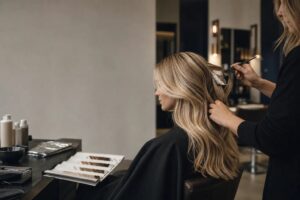
Professional balayage is primarily freehand painting applied directly onto the surface of the hair shaft, with controlled placement rather than uniform sectioning. The colorist manages how much lightener saturates each section and where the product is feathered at the root, which produces the soft, graduated result clients want. Application begins below the root and sweeps upward with deliberately varied pressure: lighter near the root to diffuse, firmer through the ends to build brightness without a blocky edge. In some cases, stylists may use paddle boards or selective foils when extra lift or control is required, but the defining characteristic remains the freehand, surface-painted approach.
What makes this hard is also what makes it valuable. A skilled colorist alternates painted, partially painted, and untouched areas to create multiple tonal levels rather than a flat, single-color finish. Traditional highlights saturate strands root-to-tip in foils, producing uniform brightness and a clearly visible regrowth line. Balayage done well produces no such line because the placement itself mimics the way sunlight falls on hair naturally.
Why placement matters as much as the color formula itself
Placement isn’t random. A trained colorist selects where to deposit lightener based on how the hair moves, the cut, the face shape, and the desired grow-out pattern. Brightness is concentrated where sunlight would naturally hit: around the face, the crown, and the high points of each section. Poor placement produces color that sits in the wrong zones, looks painted-on, or photographs well under salon lighting but falls flat in daylight a week later.
This is a common reason clients come in with results from another salon that disappointed them. The issue usually isn’t the color formula itself. It’s that the placement wasn’t built around how that specific person’s hair falls and how their face is framed. Getting placement right requires genuine technical training and an eye for how individual hair behaves, which is why you should look at range in a portfolio, not just volume.
Why should your skin tone drive every color decision your stylist makes?
Warm vs. cool undertones and what they mean for balayage tones
A colorist who doesn’t factor in undertone before choosing a balayage shade is guessing. Warm undertones run golden, peachy, or yellow-based. These skin tones generally look best alongside honey, caramel, toffee, and warm golden tones that reinforce the skin’s natural radiance. Cool undertones, which read as pink, red, or bluish, typically need ash, champagne, pearl, or beige-blonde results. Excessive gold or copper on cool skin can emphasize redness and make the face look washed out rather than brightened.
Neutral undertones are more flexible. A balanced beige or customized warm-cool formula, think soft wheat blonde or muted toffee, usually looks more natural than an extreme in either direction. The goal isn’t to match a trend photo. It’s to find a tone that makes your face look more alive in natural light, not less.
How customization to complexion separates specialists from generalists
A true balayage specialist treats skin tone as the starting point before selecting a developer or toning formula. This affects which products are used, what level the hair is lifted to, and what gloss is applied afterward. Consider a salon that quotes a fixed package price with no toner consultation: that’s delivering a product, not a service tailored to you.
At Harlow, our approach to dimensional color is built around customization to each client’s complexion and personal style. The formula, the placement, and the toning steps are all chosen together based on who is sitting in the chair, not a template that gets applied to everyone. That’s what makes the difference between a result that photographs well and one that looks genuinely good every day.
What should a real balayage consultation cover before any color is applied?
The questions a skilled colorist asks in the first ten minutes
A legitimate consultation isn’t a price quote. It’s a conversation that covers your full hair history: previous color, any box dye or chemical services, heat use habits, current hair health, and what your realistic maintenance schedule looks like. A colorist who skips this and goes straight to pricing is taking a risk with your hair. Previous color and especially box dye can change how hair lifts and may create unpredictable reactions with lightener, so this information genuinely matters before any application begins.
The consultation should also set realistic expectations. A client with dark, previously colored hair who wants a bright blonde result in one session needs a colorist who will be honest about what’s achievable safely rather than what’s aspirational. The best colorists ask whether you’re willing to prioritize maximum brightness, minimal damage, seamless grow-out, or a shorter appointment, because those priorities affect every decision that follows.
How Harlow’s consult-led philosophy protects your hair and investment
At Harlow, we build the full color plan, including formula, placement, and toning steps, before the service begins. This protects hair integrity and ensures the result is repeatable and grows out beautifully rather than requiring a corrective appointment six weeks later. Corrective color after a failed balayage can be among the most time-consuming and expensive services to address, and the best protection against it is a thorough consultation before anything is mixed or applied.
Our stylist-matching quiz is an extension of this same philosophy. Pairing you with the right stylist before the first visit, based on your hair goals, budget, and schedule, means the consultation itself is more focused and productive. The right match before you walk in the door makes everything that follows work better.
How do you read before-and-after photos without being misled?
What a trustworthy portfolio actually looks like
A genuine before-and-after shows both photos in comparable lighting, with the same camera angle, similar background, and the same client in the same session. When the before is shot in harsh overhead light and the after is taken under a warm ring light with a fresh blowout, the transformation looks larger than it actually is. A large volume of after photos with no corresponding before images is a red flag, not a sign of confidence.
Look for portfolios that show a variety of hair types, textures, and starting points. A colorist who has real range can show results on fine virgin hair, on thick dark hair, and on previously colored clients. One repeated model or one hair type signals a narrower skill set than the service count suggests. Also check whether the portfolio shows different angles, not just perfectly posed front-facing shots.
The difference between a styled result and a lasting one
Most salon photos show hair freshly blown out, toned, and styled immediately after color. That’s the best-case scenario, and it should look good. But the more useful question is what the color looks like after two or three weeks: in daylight, with natural texture, not freshly styled. Ask stylists if they have photos of clients at their follow-up appointment, not just day-of shots. A colorist proud of their grow-out results will have them readily available.
When reviewing photos, look for believable detail: visible individual strands, realistic shadows, natural texture, and flyaways. Overly smooth hair, halo-like edges around the color, or tones that look uniformly bright from root to end may indicate heavy retouching. Use several examples to judge whether a salon consistently produces believable results across different clients, not just one exceptional photo.
What do Austin balayage prices actually tell you about the quality of the work?
Breaking down what goes into the price and what doesn’t
*Ranges compiled from 2026 Austin salon menus and listings, including Fresha and Blonde Faith Salon.
Prices rise for long or thick hair, significant grow-out, added gray-coverage steps, or senior and director-level stylists. Before booking, request an itemized quote that specifies whether the toner, blowout, and any extra-length charges are included. “Starting at” prices almost always assume moderate-length hair with no corrective work.
Why the cheapest option usually costs more in the long run
Corrective color after a failed balayage can be among the most expensive and time-consuming services to address. Removing banding, unwanted brassiness, or uneven previous work can take multiple sessions and significant grow-out time to resolve. That’s before factoring in the product cost, the stylist’s chair time, and the condition your hair may be in after aggressive correction attempts.
Top Austin balayage salons, including Harlow, charge prices that reflect the skill, time, and product quality required to deliver a result that holds, grows out beautifully, and doesn’t send you back to a different chair for a fix. A higher starting price, especially with a color specialist, is protection against the much higher cost of corrective work. View it as part of the same investment.
Choosing the best balayage salon in Austin: what to look for
These four criteria, genuine hand-painting technique with deliberate placement, customization to your skin tone and undertone, a thorough consultation before any formula is chosen, and a portfolio of genuine results across different hair types, are enough to evaluate any colorist in Austin before you book. They aren’t premium extras reserved for the priciest salons. They’re the baseline for a service that actually delivers what balayage is supposed to deliver.
Harlow Beauty and Hair Salon on Burnet Road in North Austin meets all of these benchmarks. Our team includes color specialists trained in dimensional blonding and rich brunette work, a consult-led booking process built around your hair history and goals, and premium product lines including Kérastase and Eufora used exclusively throughout our services. Our stylist-matching quiz sets up your consultation for success before you walk in the door, pairing you with the right colorist based on your hair goals, budget, and schedule rather than leaving the match to chance.
If you’re ready for balayage that holds, grows out beautifully, and works with your complexion, reach out to our team or take the stylist quiz to find your match and book a consultation. When you’re searching for the best balayage salon in Austin, whether you’re in North Austin, near Burnet Road, or anywhere else in the city, the first ten minutes of a real consultation are worth more than any before-and-after photo. That conversation is where the right result begins.
Frequently Asked Questions
How can I tell if a salon really uses the freehand painting technique rather than a generic application?
Look for portfolios and descriptions that emphasize freehand surface painting, controlled saturation, and deliberate placement rather than uniform sectioning or root-to-tip foiling. A true freehand approach will show soft, graduated results with varied pressure and some partially painted or untouched areas to create multiple tonal levels rather than a flat, uniform brightness.
Should I expect toner and a blowout to be included in the quoted balayage price?
You should request an itemized quote because ‘starting at’ prices often assume minimal length and no corrective work, and toner or a blowout may not be included. Asking up front avoids surprises and clarifies whether extra-length charges, gray coverage steps, or finishing services are covered in the price you’re given.
What is the stylist-matching quiz and why does it matter for my balayage result?
The stylist-matching quiz pairs you with a stylist based on your hair goals, budget, and schedule before your visit so the consultation itself can be more focused and productive. That pre-match increases the chance your consultation leads to a tailored plan for formula, placement, and toning that protects your hair and investment rather than relying on a one-size-fits-all template.