What hair color technique is best for women who can only visit the salon every few months? If your real appointment window looks more like four to five months rather than six weeks, you’ve probably spent time staring at regrowth that announces itself way too early, wondering whether the problem is your colorist or the technique itself. Most of the time, it’s the technique. Many traditional high-contrast methods simply aren’t designed for a stretched schedule, but several low-contrast options are, and knowing which ones can change everything.
At Harlow Beauty and Hair Salon, schedule is treated as a core part of the color conversation from the very first consultation. Which technique gets used, where the color is placed, how much contrast is built in, all of it flows from one foundational question: how often are you realistically coming in? By the end of this article, you’ll know exactly which techniques are built for infrequent salon visits, what realistic intervals look like for each, and how to keep the results looking intentional between appointments.
Why contrast level determines how long your color actually lasts
Before ranking any technique, one concept underpins everything else: the higher the contrast between your root and the colored lengths, the faster new growth becomes visible. This isn’t a quality issue. It’s physics. Greater tonal contrast between root and length makes regrowth noticeable much sooner; minimal contrast delays visible demarcation significantly. That principle is the foundation of every stretch-friendly color technique.
High contrast: a regrowth line you’ll notice fast
Traditional full foil highlights create sharp, clearly defined boundaries between new growth and existing color, typically requiring a refresh every six to eight weeks. Single-process permanent root coverage generally needs touch-ups even sooner, around four to six weeks, because the opaque pigment produces an immediate line the moment new growth appears. A client who gets platinum highlights, for example, will see a visible dark band at the root well before hitting the three-month mark. The color itself can be technically flawless, and the problem still persists, because root contrast does the announcing regardless.
Low contrast: the principle behind every stretch-friendly technique
Techniques that keep the root close to a client’s natural level, or that blend color gradually from root to ends, stay in the “this looks intentional” window far longer. The grow-out doesn’t produce a hard line so much as a gradual shift. Every technique ranked in the next section is built on this principle, applied in slightly different ways.
Top hair color techniques for women who visit the salon every few months
Here’s the honest ranking, from the longest realistic interval to the shortest. These are real ranges, not optimistic estimates.
Lived-in color and balayage: the leaders at 4, 6 months
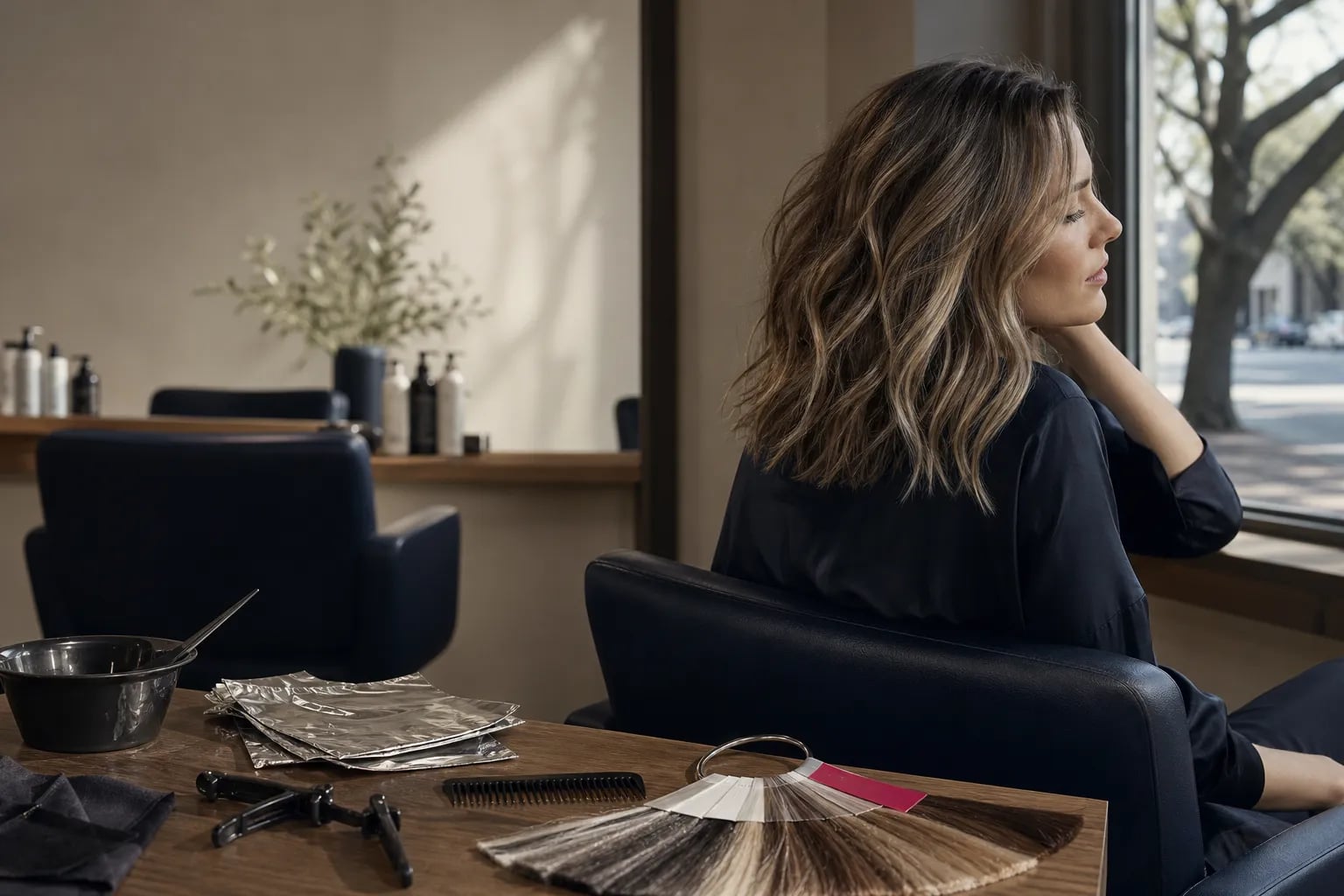
Balayage is hand-painted freehand onto the hair, placed away from the root, so there’s no hard line to grow out. A soft, low-contrast balayage can genuinely reach five to six months between major appointments. Lived-in color takes this further by treating the root as an intentional part of the design rather than a starting point to be hidden. The root stays close to the natural base, the transition is gradual, and the overall effect is that new growth simply continues what’s already there.
The distinction between a standard balayage and a lived-in version matters a great deal for women on a longer schedule. Standard balayage can still be high-contrast if the lighter pieces start closer to the root or the tonal difference is significant. A lived-in balayage is specifically built around low-contrast placement with a soft, blended root. If your schedule is four months or longer, lived-in color is the technique to ask for by name.
Root smudge and shadow root: the 3, 4 month buffer
A root smudge or root melt deposits a shade close to your natural color at the root and blends it gradually into the lighter lengths. It replaces the hard line between natural hair and salon color with a soft gradient, so new growth looks intentional rather than like a distinct band. As a standalone technique, a root smudge supports a three-to-four month interval. Combined with balayage, it can push that window even further by giving new growth something natural to blend into.
There’s a meaningful difference between a smudge and a melt worth knowing: a root smudge blends through roughly the first inch or two, while a root melt extends several inches down the shaft and creates a longer, more gradual gradient. The melt generally disguises regrowth for longer, which makes it the better choice when appointments are truly stretched.
Babylights and soft ombré: closer to the 3-month mark
Babylights are fine, subtle, and placed in thin sections that mimic natural sun-lightened hair. Their grow-out is softer than traditional chunky highlights, but because they’re placed closer to the root, new growth typically becomes noticeable around eight to twelve weeks. Very fine, well-blended babylights can occasionally reach four months, but they’re not the first choice for a five-to-six month goal.
Soft ombré in a low-contrast version can reach three to four months, as long as the transition between root and lightened ends is gradual rather than sharply defined.
Full highlights don’t belong on this list at all. Their regrowth line, which appears clearly within six to eight weeks, cannot be stretched without the result looking unkempt rather than naturally grown-in.
Gray blending methods that stretch touch-ups to several months
Full permanent gray coverage is one of the least compatible choices for a stretched schedule, and it’s worth addressing directly because so many women default to it. All-over permanent color applied to gray creates a perfectly sharp line where new silver growth meets dyed hair, typically requiring touch-ups every four to six weeks. Arriving at a four-month appointment with several inches of visibly distinct regrowth is the predictable outcome. The better approach is dimensional blending instead of covering.
Why full permanent gray coverage creates the harshest regrowth line
Permanent color is opaque, which means the moment new gray grows in, it has nothing to transition into. The line is immediate and obvious. For anyone managing significant gray on a stretched schedule, full coverage works against the goal from day one. Dimensional blending is the alternative worth asking about.
Dimensional gray blending: the approach that ages gracefully
Fine highlights or micro-weaves mimic the natural scatter of gray through the hair, particularly effective when placed through the part, hairline, and temples. Because the technique distributes silver visually rather than erasing it, new growth connects to existing strands naturally. Balayage placements that connect silver roots to the lengths can support roughly three-to-six month intervals in the same way. A combination of fine highlights, lowlights, and a demi-permanent gloss, sometimes called French blending, creates dimension instead of a solid contrast band, allowing the grow-out to stay far less noticeable for months at a time.
The key mindset shift here is that the goal is to blur the gray, not erase it. When color is designed around a client’s natural gray pattern rather than fighting it, the grow-out becomes part of the look. Ask your colorist about dimensional gray blending or French blending specifically, and request that the root area stays close to the natural base with a soft, untouched or root-smudged transition.
How to talk to your colorist to get a stretch-out result
Knowing the right technique is only part of the equation. The phrasing you use at your consultation determines whether the result is genuinely grow-out-friendly or just a standard service with a fancier name. A skilled colorist will build the technique selection and placement strategy around your specific visit frequency from the start, that’s what separates a stretch-out color plan from a one-size appointment. At Harlow Beauty and Hair Salon, that kind of schedule-first thinking is built into every color consultation.
The exact phrasing that gets the right result
Bring these phrases into the conversation and use them specifically:
- “I want the color to grow out gracefully without a hard line.”
- “Keep the root close to my natural depth.”
- “I don’t want visible regrowth before four months.”
- “I’d like brightness through the mid-lengths and ends with a subtle blend at the top.”
- “Can we use a root smudge or melt to soften the transition?”
Contrast those with one phrase to avoid: “I want maximum brightness on day one.” That request and grow-out longevity work in opposite directions. The brightest, most high-contrast result is also the one that ages the fastest. A skilled colorist will help you find the brightness level that still looks intentional at month four.
How to choose and present reference photos
Bring three to five photos with a consistent look rather than one heavily edited image. Prioritize photos that show the top and first few inches of hair, not just bright ends. The root area and transition zone matter most for judging the blend. Look for images photographed in natural light with a similar hair texture and density to yours, and point out specifically: “I like the root in this photo” or “I don’t want this much contrast.” Photos are conversation starters, not blueprints.
Questions that prevent a harsh root line
Before the service begins, ask these directly:
- “Where will the blend start, and how will the transition be diffused?”
- “Will a root smudge or melt be used?”
- “Would a demi-permanent gloss be appropriate for the root instead of permanent color?”
- “How will this look at eight weeks post-appointment?”
- “Can you show me examples of your work several months after the appointment?”
A well-prepared client asks these questions. A skilled colorist will welcome every one of them.
At-home routine that keeps color looking intentional between visits
The right technique gets you to month four. The right at-home routine is what determines whether you actually make it there looking good. These habits don’t just extend color, they protect the investment made at the salon.
Washing, toning, and the products that match your shade
Wash two to three times weekly with a color-safe, sulfate-free shampoo and wait at least 48 hours after a color appointment before the first wash. For blonde and highlighted hair, purple shampoo counteracts yellow and brassy tones. Start with once weekly, leave it on for the recommended time (usually two to five minutes), and alternate with your regular color-safe shampoo. Brunettes should look for blue-toned shampoos to neutralize unwanted warmth. Purple shampoo is a toning tool, not a weekly replacement for regular shampoo. Overuse leads to dull, muddy results fast.
Color-depositing masks and at-home glosses are useful for refreshing tone between appointments, particularly when lengths start looking faded. A clear gloss boosts shine without shifting shade; a tinted version refreshes tone. Use them when you notice fading rather than automatically every week, because excessive pigment can cause uneven buildup over time.
The habits that quietly accelerate fading
Heat styling without a protectant, sun exposure, chlorine, salt water, and hot water washing all work against color longevity. These factors don’t just fade tone, they increase hair porosity, which causes hair to grab and release color unevenly over the weeks that follow. Over several months, results can become patchy if these habits aren’t managed. Apply heat protectant before any styling tool, rinse with cool or lukewarm water, and rinse hair with fresh water before swimming. These small adjustments have a real, compounding impact on how long the salon result holds.
The right technique for your schedule is out there
For women who can only visit the salon every few months, the best hair color techniques share one thing: the lowest possible contrast at the root, designed around your natural base and actual visit frequency. Lived-in color and balayage lead at four to six months. A root smudge or melt adds a meaningful buffer. Dimensional gray blending replaces full coverage for anyone managing silver. And a consistent at-home routine bridges the gap between every appointment.
The most important step happens before any color is applied: a thorough consultation where your schedule, hair history, and goals all shape the technique and placement plan. That approach, asking how often you’re realistically coming in before deciding anything else, is central to how Harlow Beauty and Hair Salon approaches every color appointment. Reach out to book a consultation and get a color plan built specifically around your lifestyle and the schedule you actually have.