You’ve seen the words balayage, highlights, ombre, and glossing everywhere: on salon menus, in Instagram captions, on the lips of every stylist you’ve ever visited. You probably have a general sense of what each one looks like. But if someone asked you to explain the actual difference, you might find yourself reaching for vague descriptions that overlap more than they clarify. That’s not a knowledge gap worth being embarrassed about. These terms get used interchangeably all the time, even by people who have been sitting in salon chairs for years.
The reason this matters goes beyond vocabulary. Choosing the wrong technique can mean spending twice as much on maintenance as you need to, or locking yourself into a color schedule that doesn’t fit your actual life. This article is a plain-language hair color comparison of all four techniques, balayage, highlights, ombre, and glossing, so you can walk into your next consultation knowing exactly what you’re asking for and why. Whether you’re scanning a hair color chart at the salon or trying to decode your stylist’s recommendation, this breakdown gets you there faster. The best final decision still happens in conversation with a stylist who knows your hair, but you’ll arrive at that conversation better prepared.
What balayage, highlights, ombre, and glossing actually mean
Before diving into a hair color comparison, it helps to understand what each technique actually is. These four words get treated as interchangeable, but they describe fundamentally different things.
Balayage: freehand color designed to grow out beautifully
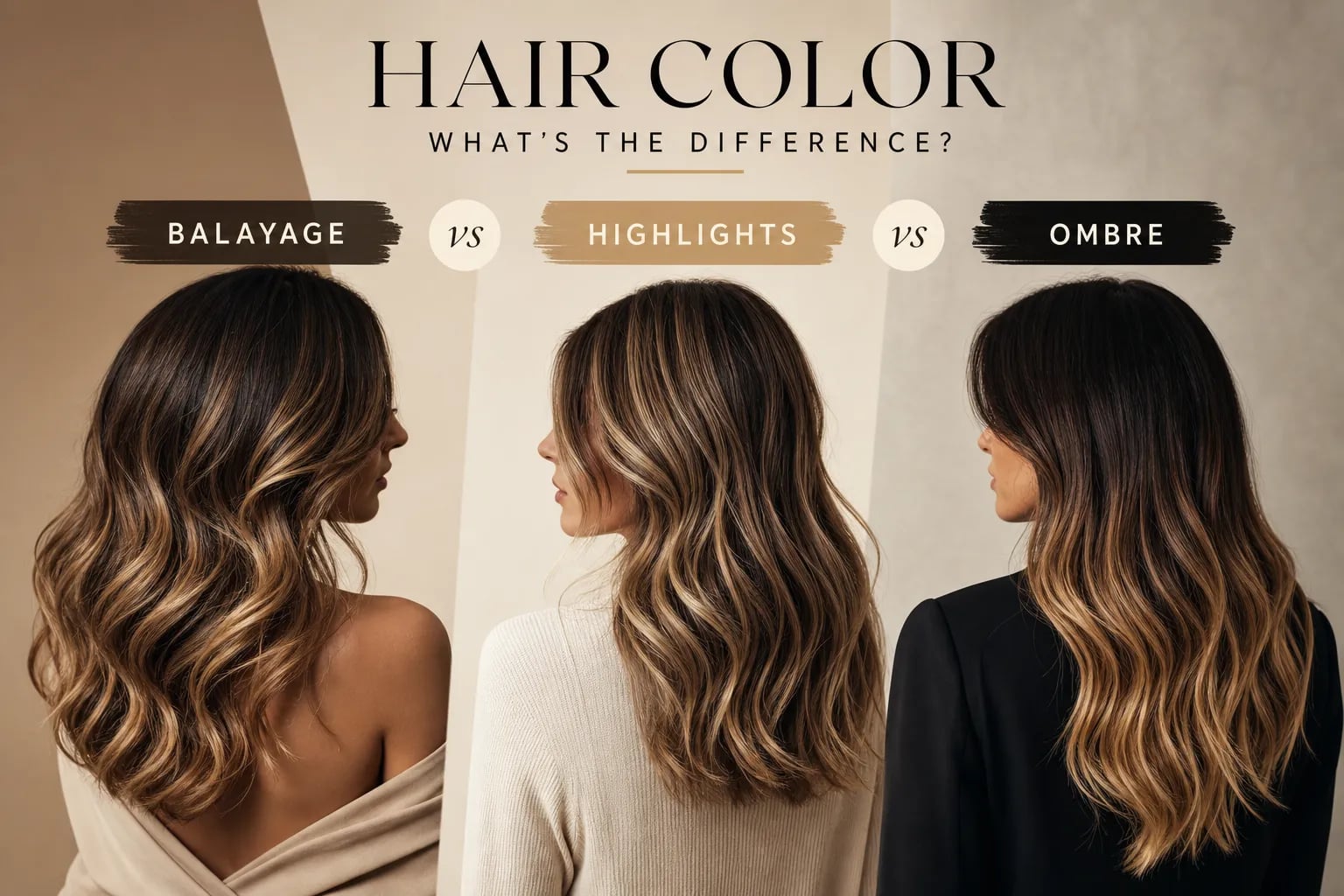
Balayage is a freehand painting technique where a colorist sweeps lightener or color directly onto the surface of the hair in sections, without foil. The placement is intentionally uneven and diffused, mimicking the way sunlight naturally lightens hair from the surface down. Because there are no foils creating a hard edge and no color placed directly at the root, the result grows out gradually rather than producing a sharp line of demarcation. That gradual grow-out is the defining feature, not just a bonus.
Highlights, ombre, and glossing: what makes each one distinct
Highlights use foil to isolate sections of hair and lift them to a specific shade. The foil creates heat and containment, which produces brighter, more uniform lightening within each section and stronger contrast against the surrounding hair. Ombre describes a color effect rather than a single technique: it’s the gradient look where hair is darker at the roots and lighter toward the ends, achieved through several different application methods. Glossing is categorically different from the other three. It deposits tone and shine rather than lifting, making it a finishing or maintenance tool rather than a structural color change.
Hair color comparison: how each technique actually works in the salon
Understanding the process helps set realistic expectations before you book, because what happens during each service directly shapes the result you leave with.
Foil vs. freehand: the process behind highlights and balayage
With traditional highlights, a stylist weaves or slices thin sections of hair, applies lightener or color to each one, and wraps them tightly in foil. The foil traps heat, speeds up the lifting process, and keeps each section separate so the color develops evenly from root to tip. That controlled environment is what produces the bright, uniform look highlights are known for. Balayage works in the opposite direction: the stylist paints directly onto the hair in open air, usually starting lower on the shaft and sweeping toward the ends. No foil, no uniform lifting. The open-air application creates the soft, blended finish that distinguishes balayage from foil work, though stylist skill and placement height also influence how seamless that blend appears.
What ombre and glossing look like on the salon chair
An ombre service usually involves lightening the mid-lengths and ends while leaving the roots darker, then blending the two zones for a smooth gradient. The colorist may use a balayage application, a structured lightening formula applied in horizontal sections, or a combination of both depending on the look you’re after. A gloss treatment looks nothing like any of these. It’s applied to the hair after a color service, or on its own as a standalone tone refresh. It seals the cuticle, adds significant shine, and can neutralize warmth or deepen existing color without changing the hair’s actual level.
Hair color comparison: how long each technique lasts and what upkeep looks like
Longevity is often the deciding factor in any hair color comparison, especially for clients with demanding schedules. The maintenance cadence for each technique is genuinely different.
Balayage and ombre: the low-maintenance case
Balayage and ombre are frequently chosen because of how forgiving they are over time. Balayage is typically painted away from the root, and ombre by design leaves the roots naturally darker, so both techniques are built to grow out softly without a harsh line of demarcation at the scalp. Most clients go 12 to 16 weeks between balayage appointments, and many stretch even longer by adding a gloss treatment in between to keep the tone from fading into brassiness. For anyone managing a packed calendar, that timeline makes a real difference in both time and cost over the course of a year.
Highlights and glossing: what to expect month to month
Traditional foil highlights typically require a return visit every six to eight weeks, because the lifted sections sit close to the root and create visible contrast as natural hair grows in. The regrowth line is especially noticeable on darker natural hair, where the difference between lifted sections and natural color is most pronounced. Glossing alone lasts roughly four to six weeks and functions as a maintenance tool rather than a standalone service. Clients who add a gloss between their balayage or highlight appointments consistently extend the life of their color without taking on the full commitment of another lightening session.
Which technique suits your hair type and current condition
Hair type and starting condition should factor into this decision just as much as the look you want, not every technique performs the same way on every head of hair.
Fine or thinning hair vs. thick or coarse hair
Balayage tends to work especially well on fine hair because the soft, diffused color placement creates the illusion of depth and movement. Heavy foil highlights on fine hair can sometimes produce a striped or overworked look because the contrast is too uniform across limited density. Thick or coarse hair handles both foil highlights and balayage well. The extra density gives the colorist more room to build dimension, and ombre can be particularly striking on thick hair because the gradient has more surface area to develop across.
Starting level, hair health, and color history
Darker natural hair requires more lifting to achieve visible highlights or a pronounced ombre, which means the hair goes through more chemical processing in a single session. Hair that’s already compromised by previous color, heat damage, or dryness may not be a safe candidate for aggressive lightening in any format. Glossing becomes a smart option in those cases because it adds tone and shine without any lifting at all. This is exactly why knowing your hair’s current color level and having a stylist assess its condition before selecting a technique genuinely changes the outcome. A good colorist will evaluate your hair’s starting point much like a shade conversion chart, working backward from where you are to map the safest path to where you want to be.
Matching your color technique to your actual lifestyle
The best technique is the one that fits how you live from week to week, not just how you want to look in the first photo after your appointment.
The case for low-upkeep color
If you travel frequently, work long hours, or simply don’t want to be in a salon every six weeks, balayage and ombre are the clearest answers in this breakdown. They are designed to look intentional as they grow out, not neglected. Anecdotally, many clients who switch from full foil highlights to balayage find they spend less on color over the course of a year without feeling like their hair has outgrown its style. The grow-out problem that tends to follow highlight clients simply doesn’t exist in the same way with a well-executed balayage.
When highlights or a gloss refresh makes more sense
Some people genuinely want the brightness that full foil highlights deliver, and for them, the more frequent visits are worth the investment. If you love high-contrast, sunlit dimension, or you have very light hair that needs a color boost and tone correction, highlights can deliver that level of precision without the structural commitment of a larger color overhaul. A gloss is also ideal when you already have a color service you’re happy with and simply want it to stay vibrant and shiny between appointments. Neither of these options is a compromise; they’re just the right tool for a specific result.
Why a consultation changes everything about choosing
A photo from Instagram or a general description of a technique can only get you so far. The conversation that happens before any color is mixed is what actually determines whether you leave happy.
What a good consultation actually covers
A thorough color consultation goes well beyond asking what shade you want. It looks at your natural hair level and underlying pigment, the history of previous color and chemical services, how much time you realistically have for maintenance, and what your day-to-day lifestyle actually looks like. That information determines which technique will perform the way you expect it to and which ones might set you up for disappointment or damage. Skipping the consultation, or rushing past it to jump straight to a service, is one of the most common reasons color corrections happen. Many corrections trace back not to technical error, but to a mismatch between what the client expected and what the starting hair could realistically deliver in a single session.
How Harlow Beauty and Hair Salon approaches the process
Salons that lead with consultation before color, like Harlow Beauty and Hair Salon in North Austin, treat this matching process as the foundation of every service. Rather than defaulting to a one-size-fits-all recommendation, their stylists assess each client’s unique hair, goals, and schedule before recommending a direction. That approach sets realistic expectations from the very first appointment and reduces the likelihood of costly corrections down the line. If you’re weighing your options, that kind of conversation is exactly where the right decision takes shape, not from a mood board alone.
Quick-reference hair color comparison
Not sure which technique fits your situation at a glance? The four options break down like this across the most common decision points:
- Balayage: Freehand, no foil, grows out softly, best for low-maintenance lifestyles and fine to medium hair
- Highlights: Foil-based, high precision, more frequent upkeep, best for those who want bright, uniform dimension
- Ombre: Gradient effect, dark-to-light, several application methods, works especially well on thick hair with a longer grow-out tolerance
- Glossing: Tone and shine only, no lifting, best used as a standalone refresh or between lightening appointments
This overview is a starting point. A skilled colorist can also walk you through hair color swatches and use virtual hair color try-on tools during your consultation to give you a clearer picture of how each technique will read on your specific hair before any product is applied.
The bottom line on balayage, highlights, ombre, and glossing
Balayage, highlights, ombre, and glossing each serve a different purpose. The right choice depends on your hair type, natural level, maintenance tolerance, and how you actually live your life. Understanding the differences means you can walk into a consultation with informed questions rather than leaving more confused than when you arrived.
Think of this breakdown as your starting point. Bring that knowledge into a conversation with a skilled colorist who can confirm the direction based on what they see in your hair, your specific hair color swatches, condition, and history included. If you’re in the North Austin area and ready to get clarity before committing to a service, reach out to the team at Harlow Beauty and Hair Salon to book a consultation. That’s where the right decision gets made.