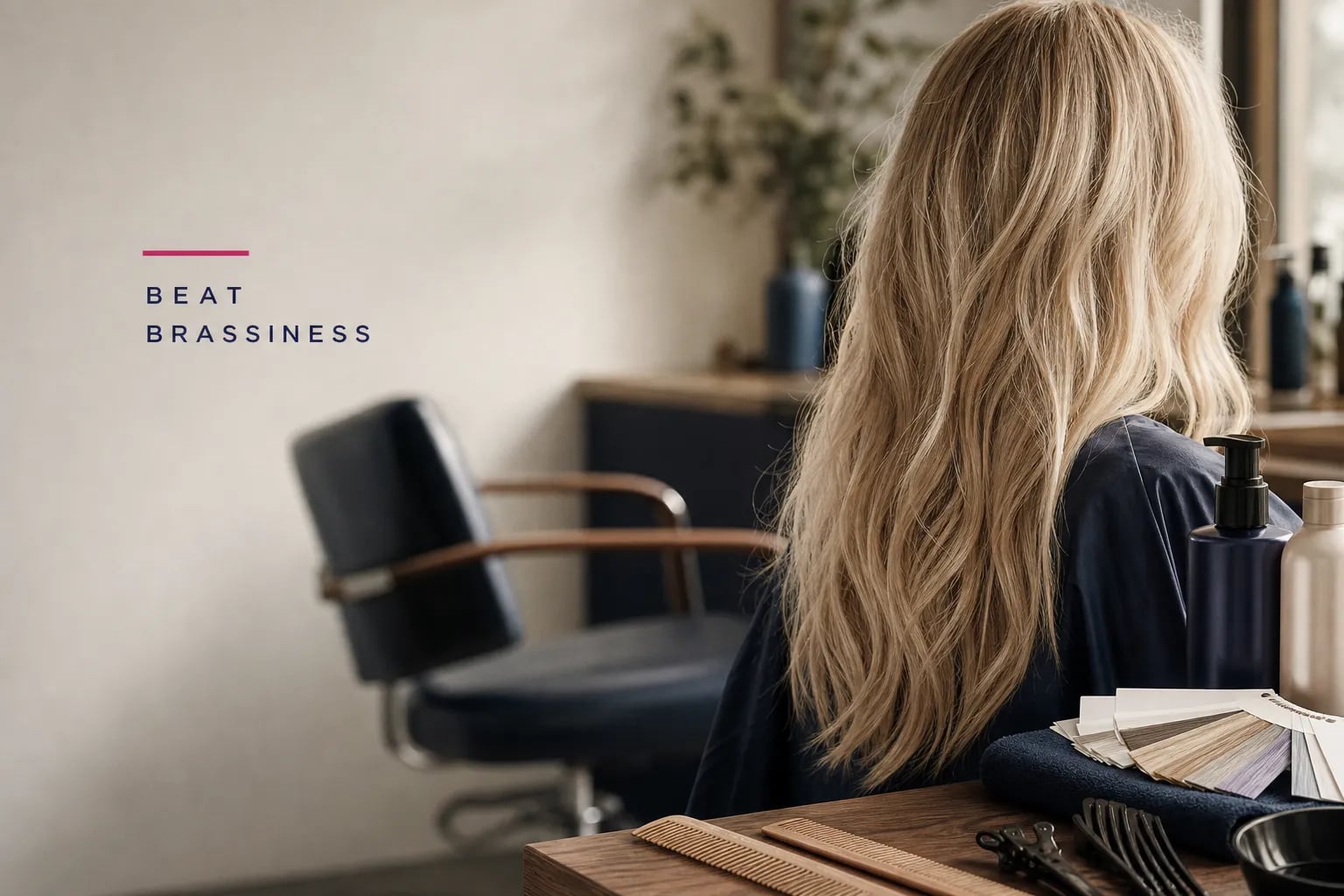
You leave the salon with the most perfect, cool-toned blonde you’ve ever had, and three weeks later it’s gone warm, dull, and decidedly yellow. If that sounds familiar, the problem isn’t your color or your stylist. It’s a gap in your blonde hair care routine between appointments. Keeping that color looking intentional is less about luck and more about building the right system: the right products, used in the right order, at the right frequency.
This article walks you through exactly that. You’ll get a product-specific routine for daily care, weekly toning and repair, and monthly resets, plus guidance on how to adjust your blonde hair care based on your specific blonde type.
Why blonde hair needs more than regular shampoo
The chemistry behind brassiness
Brassiness in lightened hair comes down to residual warm melanin and environmental exposure. When hair is lifted, the melanin pigments responsible for your natural color don’t always lift out completely. Those residual pigments are warm-toned by nature, and over time, sunlight, hard water, heat, and product buildup make them more visible at the surface. Increased porosity in lightened hair accelerates this process by making it easier for minerals and environmental factors to penetrate the strand. This isn’t a flaw in your color service. It’s a predictable process you can absolutely manage.
How bleach changes hair structure
Lifting also disrupts the hair cuticle and breaks internal bonds, which is why bleached hair feels more porous, tangles more easily, and absorbs products differently. Shampoos containing harsh sulfates like sodium lauryl sulfate (SLS) or high concentrations of sodium chloride can accelerate color fade and do nothing to address that structural damage. Every product in your routine needs to serve a dual purpose: tone and protect. Once you understand that, building your routine becomes straightforward.
Daily blonde hair care: shampoo, conditioner, and wash frequency
Choosing a color-safe shampoo
A sulfate-free, color-safe shampoo is the non-negotiable foundation of any blonde hair care routine. On the label, look for the absence of sodium lauryl sulfate (SLS) and sodium chloride, and look for supportive ingredients like keratin, argan oil, or hydrolyzed proteins. These additions clean without stripping. One clarification worth making upfront: purple shampoo for blonde hair is not a daily shampoo. It’s a targeted toning tool used one to two times per week at most, and we’ll cover it in the next section.
How often to wash based on your blonde type
Most blondes do best washing two to three times per week. Fully bleached and platinum hair is the most fragile category and benefits from stretching washes to every three to four days at minimum. Natural blonde hair can handle every two to three days since the cuticle hasn’t been chemically altered. Think of wash frequency as a lever: fewer washes means slower color fade and better moisture retention, not a hygiene compromise.
Conditioner as a daily non-negotiable
Conditioner goes on every single wash day. For bleached hair, focus it on mid-lengths and ends rather than roots, where it can weigh hair down. Many brands formulate matching shampoo and conditioner systems for consistent performance, so pairing products from the same color-safe line is generally a reliable approach.
Small daily habits that add up over time
Water temperature is easy to overlook but genuinely matters. Hot water opens the cuticle and lets color molecules escape with every shower. Rinsing with cool or lukewarm water keeps the cuticle closed and slows the fading process. Swapping a regular terrycloth towel for a microfiber towel or a soft cotton t-shirt also reduces friction on the cuticle when blotting wet hair.
If you live in an area with hard water, mineral buildup is likely one of the biggest contributors to brassiness in your hair, and most clients never think to address it. Iron and copper deposits from hard water cling to the porous surface of bleached hair and create warm, yellow, and orange tones that no amount of purple shampoo fully clears. Use a chelating shampoo once a month to remove that mineral buildup and give your toner a clean slate to work from.
The weekly toning and repair ritual
When and how to use purple or toning shampoo
Purple shampoo uses violet pigments to counteract yellow and brassy tones, it’s the cornerstone of brass removal for blonde hair at home. For most blondes, once a week is the right starting frequency. Platinum and heavily bleached hair can use it every five to seven days. For highlighted and balayage blondes, toning is generally needed less often, typically every two to six weeks, and should be adjusted based on how quickly brassiness appears between sessions. Going too frequent with toning shampoo on these hair types risks an over-toned, ashy result.
The correct technique for purple shampoo for blonde hair: apply to wet hair, work it through evenly, and start with just one to two minutes of contact time. From there, you can increase to up to five minutes on less porous hair as needed. Toning shampoos can be drying on their own, so always follow with a nourishing conditioner, that step isn’t optional.
For product choices, break your options down by priority:
- Olaplex No.4P Blonde Enhancer combines bond-building repair with violet toning, making it the strongest all-around pick for bleached hair.
- Kérastase Blond Absolu Ultra-Violet is the go-to for cool-toned or platinum blondes and is notably less drying than most purple shampoos.
- Amika Bust Your Brass adds quinoa protein for strength alongside toning, a smart mid-range option.
- Matrix So Silver delivers reliable brass control at an accessible price point.
Deep conditioning and bond-building masks
Once a week, swap your regular conditioner for a deep conditioning mask or a bond-repair treatment. For bleached or fragile hair, a bond-building mask like Olaplex No.8 addresses structural damage rather than just adding temporary surface softness. For less processed blondes, a hydrating mask with shea butter, argan oil, or avocado oil gets the job done well. Apply it, throw on a shower cap, and leave it for five to ten minutes for better penetration before rinsing.
Heat protection on every styling day
Every blow-dry, curling session, or flat-iron pass requires a heat protectant applied to damp hair first. Bleached hair is already more porous and heat-sensitive, and skipping this compounds damage with every styling session. A lightweight leave-in or multitasking serum on mid-lengths and ends also reduces friction and daily breakage between washes.
Monthly reset: clarifying, glossing, and professional care
Why a monthly clarifying wash matters
Hard water minerals, dry shampoo residue, and product buildup accumulate over weeks and dull your blonde from the outside in, regardless of how well you tone at home. A chelating or clarifying shampoo once or twice a month strips that buildup and lets your toning products actually reach the hair. Always follow a clarifying wash immediately with a deep conditioning mask, these shampoos are intentionally strong and will leave hair feeling stripped if you stop there.
Salon gloss and toner refresh timing
A salon gloss or toner service typically holds for four to six weeks before washing out, making it the natural anchor of a monthly or every-five-weeks salon visit. Glosses add shine and refine tone without lifting, which is why they complement at-home care so well: you maintain at home, and the salon resets. At Harlow Beauty and Hair Salon, stylists help clients identify exactly which at-home products will hold their tone longest between gloss appointments. The Kérastase Blond Absolu line comes up often in those conversations because its violet pigments and repair-focused formula help extend toner results without the drying side effects common to other purple products.
At-home bond repair on a monthly check-in
Once a month, assess how your hair actually feels. Soft and elastic means your routine is working. Brittle and rough means it’s time to increase your bond-builder frequency from once a week to twice a week for that month. This monthly check-in prevents small damage from quietly compounding into breakage before you notice it.
How to adjust your blonde hair care by hair type
Natural and highlighted blonde
Natural blonde hair hasn’t been lifted, so the structure is intact. The focus here is gentle washing and toning only when needed, roughly every four to eight weeks. Highlighted blondes need more attention at the ends: weekly deep conditioning and toning shampoo every two to four weeks, adjusted based on how fast brassiness creeps in, keeps things looking clean and dimensional. Both types have the most flexibility in routine timing.
Balayage maintenance
Balayage blends natural roots with lifted pieces, so the care needs are split. Lightened ends call for weekly masking and toning shampoo every two to six weeks, while roots can go much longer between treatments. A salon gloss every four to eight weeks keeps the faded pieces blending softly rather than going muddy or brassy at the transition.
Full bleach and platinum care
Full bleach is the most demanding category, and the maintenance routine reflects that. It requires the most frequent conditioning (twice-weekly masking if hair feels rough), a wash schedule of every three to four days at minimum, and strict attention to bond-repair treatments. Purple shampoo can be used weekly, but it must always be followed by rich conditioning to offset its drying effect. Toner fades faster on porous bleached hair, so a professional toner refresh is common, typically somewhere in the one-to-four-week range depending on your hair’s porosity and how quickly the tone shifts. Budget for it accordingly.
Products worth building your blonde hair care routine around
Toning shampoos worth buying
The right purple shampoo for blonde hair depends on how quickly your hair goes brassy and how light your base is. For most scenarios, these cover the range well:
- Olaplex No.4P: best overall for bond-building plus toning, especially for bleached hair
- Kérastase Blond Absolu Ultra-Violet: ideal for cool-toned and platinum blondes who want toning without added dryness
- Amika Bust Your Brass: strong mid-range option with quinoa protein for added strength
- Matrix So Silver: reliable brass control at an accessible price
- Clairol Shimmer Lights and L’Oréal EverPure Brass Toning: dependable budget picks for frequent users
Conditioners, masks, and bond treatments
For your regular wash days, a nourishing color-safe conditioner handles baseline hydration. Kérastase Blond Absolu Masque Ultra-Violet and Nexxus Blonde Assure are both solid options in this category. For your weekly deep treatment, reach for a shea, argan, or avocado oil-based mask if your hair is highlighted or natural blonde, and upgrade to a bond-building mask like Olaplex No.8 if your hair is bleached. The best maintenance routine for blondes layers these products by purpose rather than relying on one formula to handle everything.
Leave-ins, serums, and heat protectants
A lightweight leave-in or multitasking serum applied daily to mid-lengths and ends reduces friction and protects against the small mechanical damage that accumulates from brushing, styling, and everyday wear. Silicone-containing products like dimethicone aren’t a problem for blonde hair, they smooth the cuticle and reduce friction on already-porous strands. Balance silicone-based products monthly with your clarifying wash to prevent buildup from dulling your color.
How Harlow’s colorists set their blonde clients up for success at home
At Harlow Beauty and Hair Salon on Burnet Road in North Austin, the appointment doesn’t end when the color is rinsed out. Every blonde client leaves with a specific at-home care plan built around their hair’s porosity, damage level, lifestyle, and the exact service they received that day. That plan isn’t a generic handout, it’s built around the client’s formula, water type, and washing habits so the recommendations actually fit their real life.
Kérastase’s Blond Absolu line is one of the ranges Harlow’s stylists reach for most often with blonde clients. It’s formulated specifically for bleached and highlighted hair and contains ingredients like hyaluronic acid targeted to blonde hair, in contrast to many mass-market options. Many stylists and users report that a targeted, salon-grade blonde routine can extend tone and improve hair feel compared with standard over-the-counter alternatives, and that difference typically shows up within the first few weeks.
Harlow’s team includes a Kérastase Ambassador who helps match clients to the right products as part of every blonde service, a detail that reflects the salon’s broader commitment to building your color maintenance plan right into the appointment itself.
Build the routine one step at a time
The full picture is a three-tier rhythm: daily color-safe care, weekly toning and masking, and monthly clarifying and professional treatments. Blonde hair care doesn’t have to be complicated once you know which products serve which purpose and how often to reach for them.
The simplest way to start is one change per week rather than overhauling everything at once. Swap in a purple shampoo on week one. Add a weekly mask on week two. Introduce a clarifying wash on week three. Small, consistent steps outperform dramatic product hauls every time.
The best at-home blonde hair care routine works in partnership with regular salon visits, not as a replacement for them. Toning, glossing, and professional bond repair fill the gaps that no product line can fully cover at home. If you’re overdue for a color refresh or ready to get your toner dialed in, the team at Harlow Beauty and Hair Salon is ready to help you build both sides of the equation.