If you’re wondering what are the most natural looking hair extensions, picture this first: you sit up in the salon chair, catch yourself in the mirror, and your hair looks incredible. Fuller, longer, exactly what you wanted. Then you tilt your head and spot it, a thick clip poking through, a rigid weft sitting too high, a strip of hair that moves completely out of sync with the rest. The whole illusion collapses in a second.
That moment is more common than it should be, and it almost always traces back to the same three variables: the method used, the quality of the hair itself, and the skill of the person doing the work. Natural-looking hair extensions aren’t a single product you can order online and snap in; they’re the result of the right combination of all three factors working together. Get one wrong and even the most expensive weft in the world will read as fake.
This guide ranks every major extension method from most to least natural, explains what actually creates a seamless result, and helps you zero in on the right choice for your specific hair and lifestyle. The cleanest results come from salons that treat extensions as a craft, not a commodity. Understanding why starts before you ever walk through the door.
What actually makes extensions look natural before method even matters
Most people assume the method is the biggest variable. It’s not. You can install the best micro-link on the market, but if the hair itself is poor quality, the result will still look wrong. Material quality and weft construction are the foundation everything else is built on, so this is where to start.
Remy human hair vs. non-Remy and synthetic: the difference is visible
Remy human hair has all its cuticles running in the same direction, which is exactly how hair grows naturally from a single scalp. That alignment preserves natural shine, smooth texture, and the kind of fluid movement that makes hair look like it grew from your head. Non-Remy hair is still human hair, but it’s collected without keeping cuticle direction consistent. The result is more tangling, faster dulling, and a frizzy texture over time that reads as obviously fake. Synthetic hair can look polished out of the package but behaves differently from real hair under heat and movement, and that difference is noticeable up close.
The takeaway is straightforward: low-quality hair makes an undetectable result far less likely. While excellent installation can mitigate some problems, extensions made from synthetic or non-Remy hair present a much harder challenge for even the most experienced stylist. Start with Remy human hair, or ideally virgin human hair, which has never been chemically processed, and every other step becomes easier.
How weft thickness and base construction affect the final blend
Thin, flat weft bases lie closer to the scalp and disappear more easily under your natural hair. Thick or bulky wefts create visible ridges, especially on finer hair types where there’s less natural coverage to hide the base. Seamless weft construction, particularly the kind used in hand-tied wefts, starts with a thinner and more flexible foundation than most machine-stitched or clip-in options. That physical difference directly affects how the extension moves, how it lies against the head, and how easily the transition between your natural hair and the extension blends.
What are the most natural looking hair extensions? Every major method ranked
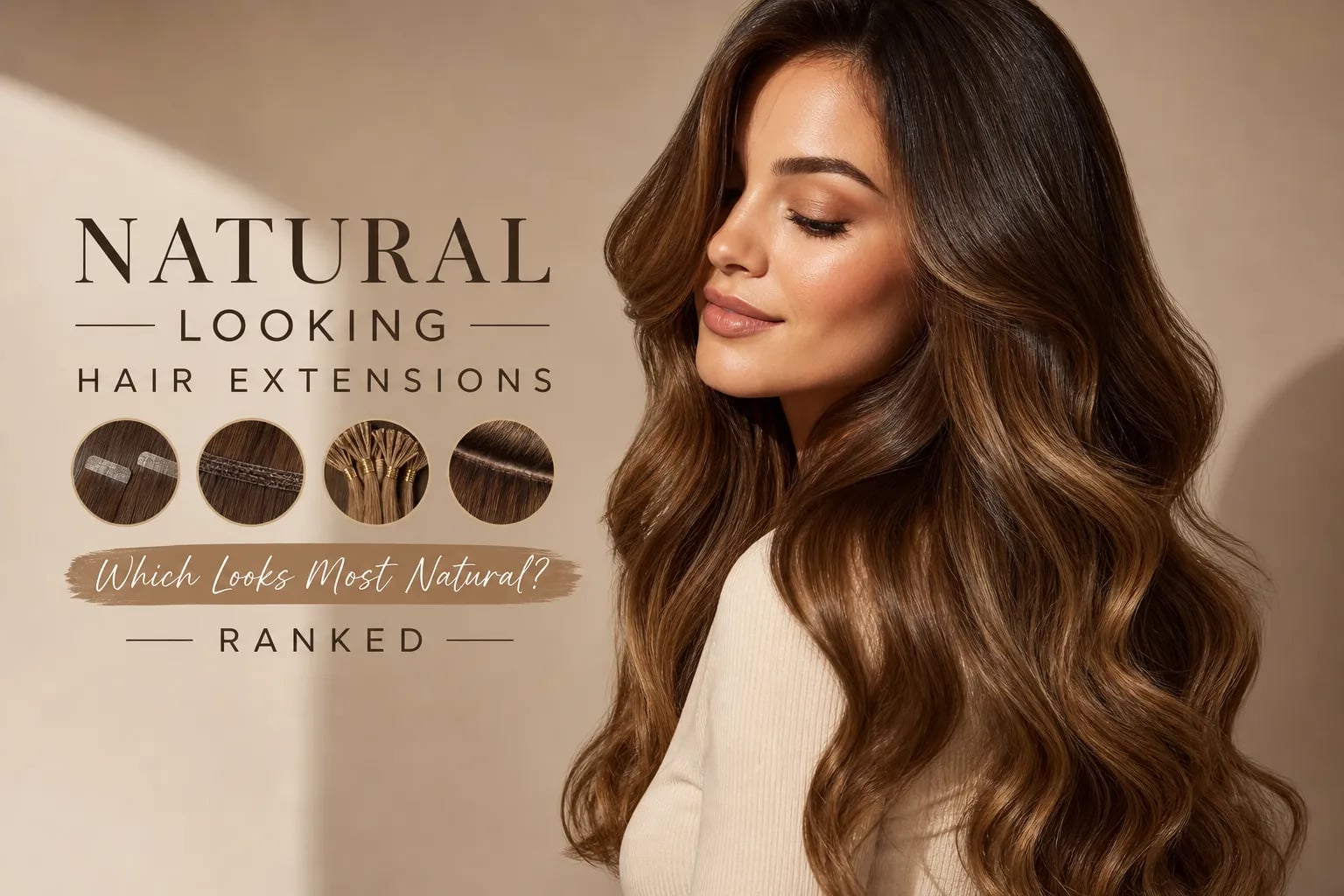
Based on specialist reviews and client feedback across extension types, here’s how the major methods stack up from most to least natural-looking. This isn’t about which method is best overall, it’s specifically about which creates the most seamless, undetectable result.
The top two: micro-link and tape-in extensions
Micro-link extensions (also called micro-bead or I-tip) consistently earn the highest natural-look ratings. Each individual strand attaches near the root with a tiny bead, allowing 360-degree movement that mimics how real hair behaves. Because they’re applied strand by strand, there’s no visible weft base at all, just hair appearing to grow from the scalp. The result, when done well, is hard to detect even at close range.
Tape-in extensions are a very close second, and for fine hair specifically, many specialists consider them the top pick. The flat sandwich-style weft lies flush against the scalp and distributes weight evenly across a wider surface area, which is why they disappear so effectively into finer hair. Tape-ins need to be moved up every six to eight weeks as your natural hair grows, but the extensions themselves can be reused for months with proper care. Both micro-links and tape-ins require professional installation to maintain the seamless result, neither is a DIY-friendly method if an invisible finish is the goal.
The middle tier: hand-tied wefts, halo, and sew-in methods
Hand-tied wefts are technically capable of producing beautiful results, but they belong in their own category because the outcome is more stylist-dependent than any other technique. A skilled hand-tied specialist can achieve results that are nearly indistinguishable from natural hair; the thin, flexible weft rows move with the hair and lie flat enough to disappear completely. An inexperienced installation produces bulky rows, visible ridges, and a result that looks worse than a good clip-in. The method has a high ceiling and a meaningful floor.
Halo extensions sit comfortably in the middle of the ranking. They’re gentle on natural hair since nothing actually attaches to individual strands, and in the right context they look convincingly natural. The limitation is situational visibility: updos, ponytails, and windy conditions can expose the wire, which is a real constraint for daily wear. Traditional sew-in and machine weft methods score moderate marks, with results that vary widely based on how the rows are laid and how much natural hair is available to cover them.
Clip-in extensions and fusion bonds: where they really land
Quality Remy clip-in extensions that look genuinely real do exist. Brands like Irresistible Me, Hidden Crown, and Cashmere Hair have been noted by reviewers for their seamless, flat wefts that blend without obvious clips showing through. The natural look is situational, though: with careful placement, a good color match, and a haircut to blend the ends, clip-ins can fool most people in daily life. They’re rarely the right solution for very fine hair or anyone who wants a consistent result across workouts, updos, and all-day wear.
Fusion bonds (K-tip or keratin bonds) can look exceptionally natural on the right candidate. Larger fusion bonds are typically easier to conceal on medium to thick hair, where there’s enough natural coverage to hide the attachment points. It’s worth noting that smaller K-tip and nano bonds can work well on fine hair too, when placed carefully by an experienced technician, the key is bond size and precise placement. As bonds grow down the hair shaft over time, visibility can increase regardless of hair type, so regular maintenance appointments matter.
Why hand-tied extensions can produce exceptionally seamless results
The ranking puts hand-tied wefts in the middle tier, but that placement reflects variability, not a ceiling. When installed by a skilled specialist, they’re among the most natural-looking hair extensions available. The answer is in how they’re built and how they move.
How hand-tied wefts move and grow out differently from other methods
A hand-tied weft is sewn by hand onto a thin, flexible row rather than machine-stitched onto a thick base. That makes the weft dramatically thinner and more supple, so it moves with your natural hair rather than sitting stiff against it. The grow-out is also cleaner than most methods: rows shift down as your hair grows, and maintenance appointments focus on moving rows back up rather than replacing extensions that have grown out awkwardly. Compare this to tape-ins, which need careful repositioning as they slide, or fusion bonds, which can become increasingly visible as they migrate down the hair shaft.
The Harlow Beauty approach to undetectable hand-tied results
At Harlow Beauty and Hair Salon in North Austin, hand-tied extensions start with a thorough consultation covering hair density, texture, natural color, and lifestyle before a single weft is placed. The specialists there treat row spacing, attachment placement, and color matching as equally important as the quality of the weft itself, because they are. That level of preparation is what separates an installation that holds up through washes, workouts, and ponytails from one that looks good only in the salon chair.
Color matching and blending techniques that seal the deal
Even a flawless installation using the best method and the highest-quality Remy hair will look off with a poor color match. Color is where many extension results fall apart, and it’s also where a skilled stylist can elevate a good installation to a great one.
Match to your ends, not your roots, and always check in natural light
The most common color-matching mistake is holding extension swatches up to the root. Extensions sit lower in the hair and are most visible at mid-lengths and ends, so the comparison should happen there. Artificial salon lighting distorts tone significantly; always check swatches near a window in indirect daylight before committing to a shade. Using two to three tones that mirror natural highlights and lowlights creates dimension that a single flat shade never will, and for anyone with balayage or highlighted hair, this step is non-negotiable.
Cutting and toning: the finishing steps most people skip
Extensions should be cut and layered after installation, not before. Point-cutting blends the extension ends with your natural hair and removes the blunt edges that read as fake from across a room. A toner or demi-permanent gloss can fine-tune a slight color mismatch and unify the overall tone between your natural hair and the extension pieces. Curling or waving natural hair and extensions together as a final step softens any remaining visible transition line. It’s a small move that makes a significant difference in photos and in person.
What are the most natural looking hair extensions for your hair type?
The ranking above is a guide, not a rule. What works best for someone with thick, textured hair will be wrong for someone with fine, color-treated strands. Use your hair type as the first filter.
Fine and thin hair: prioritize flat, lightweight attachment
Tape-ins and micro-links are the safest starting points for fine hair because both distribute weight without concentrating tension on single strands. Tape-ins are especially effective at minimizing scalp visibility since the flat weft provides wider coverage than individual bonds. Hand-tied wefts can also work beautifully on fine hair when installed by a specialist who understands how to adjust density placement for lighter hair. Clip-ins work for occasional wear, but they’re rarely the right long-term solution for very fine hair, the clips add weight and tension that fine strands aren’t built to handle daily.
Thick, textured, or color-treated hair: where your options open up
Thicker hair conceals attachment points more easily, which means the method range opens up considerably. Fusion bonds and sew-in wefts become genuinely viable options because your natural hair provides enough coverage to hide the base. For color-treated hair, especially balayage or highlighted, the color matching guidance above carries extra weight. Multi-tonal extensions blended with your specific finish will always look more natural than a single-process shade that matches your overall base but misses your dimension.
The decision comes down to three things working together
Material quality comes first, method comes second, and installation skill ties it all together. Finding the most natural-looking hair extensions isn’t one answer; it’s the right combination of all three for your specific hair type and lifestyle. A mediocre installation of a great method will always lose to a skilled installation of a good method. That’s worth remembering when you’re tempted to save money by skipping the consultation or booking with whoever has the next available appointment.
At Harlow Beauty and Hair Salon, the consultation process is built into every extension appointment. The specialists there approach each installation the way a colorist approaches a custom formula: every decision, from placement to row spacing to color selection, is tailored to the person in the chair. That attention to detail is how an installation holds up for months instead of days.
Before you book, consider what matters most to you. If it’s daily wear flexibility, quality clip-ins or a halo extension make sense. If you want the most invisible long-term result, micro-links or hand-tied wefts with a trained specialist are your answer. If low maintenance is the priority, tape-ins with a six-week move-up schedule hit the right balance. The right method already exists for your hair. You just need the right person to help you find it, and that conversation starts with a consultation at Harlow Beauty.