
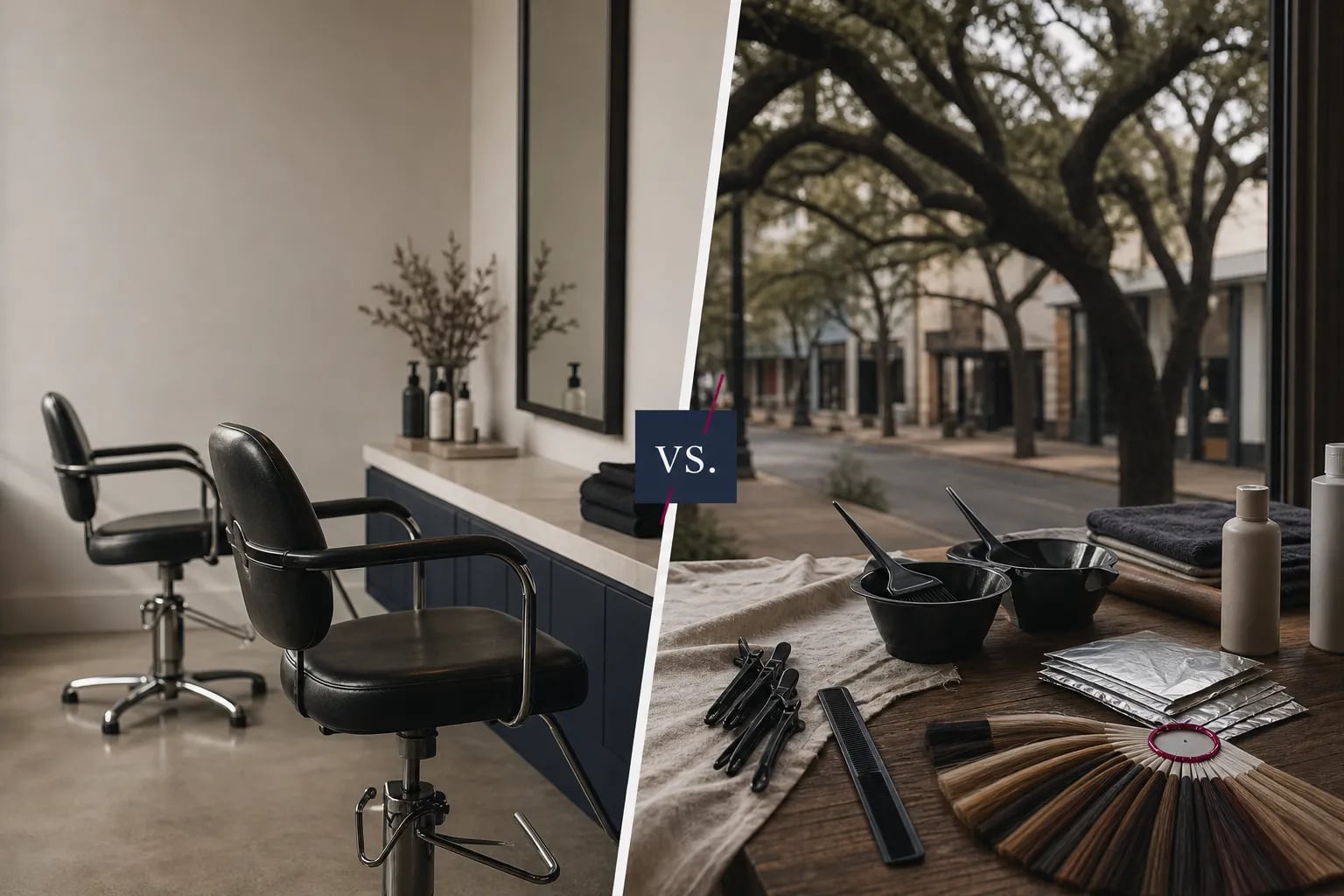
Comparing Harlow vs Deep Roots is the clearest way to figure out which Austin salon is actually built for what you need. If you want seamless hand-tied extensions or customized balayage built around your skin tone and lifestyle, Harlow Beauty and Hair Salon positions itself as the more specialized choice in North Austin. Deep Roots is a capable local option, but the two salons operate at different levels of technical depth, stylist credentialing, and client experience. This guide breaks down exactly where they differ so you can walk into your next appointment with zero second-guessing.
Both salons have earned strong reputations in Austin, and that’s worth acknowledging. But reputation alone doesn’t tell you which salon is built for your specific service. Whether you’re weighing color techniques, extension methods, or what the first appointment actually feels like, the differences show up in the details. This comparison uses four pillars, color expertise, extension services, stylist credentials, and overall client experience, with Harlow Beauty and Hair Salon on Burnet Road serving as the benchmark throughout.
Key Takeaways
- Color customization matters: Harlow’s stated approach builds every formula around your skin tone, texture, and lifestyle before a single application begins.
- Extension specialization is real: Hand-tied extensions are presented as a core specialty at Harlow, not an add-on service offered alongside everything else.
- Credentials translate to results: Harlow’s team is reported to include a Kérastase Ambassador and Eufora Educator, credentials that reflect advanced technical training and brand-level accountability.
- Deep Roots is competent: The salon offers a broad menu including IBE and Great Lengths extensions, with positive client reviews for color work, though method depth can vary by stylist.
- The consultation model is the differentiator: Harlow’s stylist-matching quiz and consult-first process are designed to reduce first-visit risk, especially for complex services.
- Pricing is comparable at the luxury tier: Both salons operate at Austin luxury price points, which makes service quality and process the deciding factors rather than cost alone.
Harlow vs Deep Roots: How Does Color Expertise Compare?
Harlow’s approach to balayage and dimensional color
At Harlow, color starts before the bowl is even mixed. According to the salon’s stated process, every formula and placement decision is mapped to the client’s skin tone, hair texture, and lifestyle during a consultation that happens before a single foil touches the hair. That process isn’t a formality, it’s what determines whether your highlights look custom or cookie-cutter six weeks later. The salon’s listed specialties include dimensional balayage, precision blonding, and rich brunette work, executed using Kérastase and Eufora rather than generic product lines.
The grow-out factor is built into the plan from the start. Harlow’s approach involves thinking about placement with the next eight to twelve weeks in mind, so the color ages gracefully rather than creating harsh lines or brassiness as it grows. For busy North Austin women who can’t be in the salon every six weeks, that kind of intentional planning makes a real difference in how the service holds up between appointments.
What Deep Roots offers for color services
Deep Roots offers a full color menu: all-over color, root tints, gray coverage, balayage, foilayage, dimensional color, and color correction. Client reviews generally describe strong outcomes, particularly for blonding and brunette transformations, and several reviewers note that stylists provide realistic guidance about what their hair can safely handle. That’s a positive sign. Some reviews, however, describe inconsistent results depending on which stylist handled the service, which points to variability that a more standardized consult process might reduce.
Which salon has the edge for Austin women wanting lived-in color?
For clients who’ve already dealt with brassy tones from a rushed formula or flat, one-dimensional color from a stylist who ignored their skin tone, Harlow’s level of personalization is specifically what they’re looking for. The consult-led model is designed to reduce the margin for error before the service begins. Deep Roots does solid color work, but its approach reads as more generalist than specialist, and for complex, customized results, that distinction matters.
Harlow vs Deep Roots: Which Salon Offers Better Extension Services?
Harlow’s hand-tied extension specialty
Hand-tied weft extensions are lightweight, distribute tension across a beaded row rather than at individual attachment points, and produce movement that tape-in or fusion methods often can’t match in day-to-day styling. At Harlow, this method isn’t presented as one option among many, it’s described as a core specialty that the team trains specifically to execute. Extension plans are built around hair health first, meaning a client’s hair density, texture, and condition are assessed before a method is chosen, not after.
In practical terms, hand-tied extensions typically require a move-up every seven to ten weeks, and the hair itself can be reused for six to twelve months with proper care. That longevity is partly a function of method quality and partly a function of how the installation was designed from the start. A well-planned hand-tied set grows out gradually and naturally; a poorly planned one can require a fix within weeks.
Extension options at Deep Roots
Deep Roots offers a wider range of extension methods: hand-tied, tape-in, K-tip fusion, Invisible Bead Extensions (IBE), and Great Lengths. The breadth of that menu is notable. Reviews specifically praise individual stylists for detailed guidance and attention to hair health during extension consultations, which reflects well on the salon. Based on publicly available profiles and reviews, it’s less clear whether that same training depth extends across the full extension team or whether expertise is concentrated among a smaller number of stylists.
Why extension method directly affects your results
The real-world difference between a generalist salon offering extensions and a specialist comes down to four factors: how natural the result looks, how long it holds, scalp comfort, and whether your natural hair comes through the process intact. At a salon that focuses on extensions as a core service, every decision in that chain tends to be more deliberate. At a salon where extensions are one service among dozens, the margin for variance is higher, particularly for clients with fine hair, thinning hair, or a history of damage from previous extension work.
How Do Stylist Credentials Stack Up?
Harlow’s brand ambassador team and educator-level training
Harlow’s team is reported to span junior to director and master-level stylists, with the roster including a Kérastase Ambassador and an Eufora Educator. These aren’t marketing titles. A brand ambassador for Kérastase has completed advanced product and scalp training, demonstrates techniques, and in many cases coaches other stylists on application and diagnosis. An Eufora Educator role carries similar responsibilities: teaching hair professionals how to assess needs and apply the brand’s systems with precision.
The practical impact of those credentials shows up in how a consultation is structured, how products are selected and sequenced, and how consistent results are across the team. Harlow’s stylist-matching quiz adds another layer: new clients answer questions about hair goals, budget, lifestyle, and schedule before being matched with the right stylist for their specific service. That removes a common source of first-visit disappointment and starts the relationship at a higher level of alignment.
Stylist levels at Deep Roots
Based on a review of publicly available information, Deep Roots does not appear to document brand ambassador or educator-level partnerships with major professional lines in the same way Harlow does. The salon carries professional products, and reviews suggest individual stylists provide strong consultations. Client reviews do reflect thoughtful individual stylists, but brand-level accountability is harder to verify without documented partnerships. The absence of that public documentation makes it harder to benchmark technical consistency across the team as a whole.
Why credentials affect what actually happens to your hair
A stylist with brand ambassador training has completed coursework beyond a standard cosmetology license, worked through more complex case studies, and is held accountable to a technical standard set by a professional brand. That training tends to show up in a more structured consultation, more accurate product sequencing, and a higher baseline of consistency. It doesn’t guarantee a perfect result every time, but it raises the floor significantly, especially for corrective color and high-stakes extension work.
What Do Real Client Outcomes at Harlow Actually Look Like?
Grow-out-friendly balayage that works between appointments
The typical Harlow color client, based on the salon’s stated target market, is a busy professional in the Allandale and Crestview area who genuinely can’t be in a salon chair every six weeks. Harlow’s approach builds the formula and placement with that reality in mind from the start. At week eight or ten, the goal is that color still looks intentional, sun-kissed where it’s supposed to be, and without the harsh line of demarcation that signals a generic highlight job past its expiration date. That outcome is the product of a placement decision made during the consultation.
Natural-looking extensions clients actually want to show off
A Harlow extension client goes through a consultation where hair health and lifestyle are assessed before any method is selected. That conversation determines row placement, volume, and whether the client’s natural hair can support the desired result without compromise. The goal of that installation process is movement that reads as natural, because the wefts are positioned and blended with that outcome in mind. The aim is results that hold up, grow out gradually, and don’t require an emergency fix three weeks later.
The difference a personalized consultation makes on outcomes
At Harlow, the consultation is designed to determine the entire service plan, where the formula gets built, the extension method gets chosen, and the timing of future appointments gets mapped out. It’s not a five-minute intake form before someone hands you a color chart. For clients who’ve been burned by salons that skipped this step, that upfront investment of time is exactly why they rebook consistently rather than keep searching for a better option.
How Does the Overall Salon Experience Differ?
Harlow’s consult-led model and what it means for new clients
New clients at Harlow start with the stylist-matching quiz, which collects information about hair goals, budget, lifestyle, and scheduling before any booking happens. That means the first appointment starts with a stylist who already understands what you’re trying to achieve and can work within your actual constraints. The product ecosystem, Innersense, Kérastase, and Eufora, reinforces the elevated experience throughout the service without feeling like a hard retail push. The Burnet Road location in the Allandale neighborhood is also easy to reach for clients across North Austin, making the practical side of the experience as smooth as the technical side.
What a standard booking experience typically looks like at other salons
At most salons, the new client experience typically starts with browsing a bio page and choosing a stylist based on photos and a short description. That works well enough for straightforward haircuts or maintenance color appointments. For first-time extension clients or someone seeking corrective color after a bad result, it adds real risk. Without a structured matching process, the alignment between client expectations and stylist strengths is largely left to chance, and that’s a gap that matters most when the stakes are highest.
Which experience gives you more confidence walking through the door?
A structured consultation model is what separates a genuinely luxury experience from a merely expensive one. Harlow’s approach is designed to reduce first-visit anxiety, increase the probability of a successful outcome on appointment one, and build the kind of trust that turns a new client into a long-term one. For complex services, that structure isn’t a nice-to-have, it’s what makes the difference between a result you love and one you’re trying to figure out how to fix.
Frequently Asked Questions
How does Harlow’s stylist-matching quiz work?
Before booking, new clients answer a series of questions about their hair goals, budget, lifestyle, and scheduling needs. The quiz matches you with the stylist best suited to your specific service rather than leaving that choice entirely to chance. It’s designed to set realistic expectations before the first appointment even begins.
How do pricing levels compare between Harlow and Deep Roots?
Both salons operate at Austin luxury price points for services like balayage and hand-tied extensions. At that tier, pricing is rarely the deciding factor, the quality of the process, the depth of the consultation, and the consistency of the results are what justify the investment.
How often do hand-tied extensions need maintenance?
Hand-tied extensions typically require a move-up appointment every seven to ten weeks. The hair itself, when properly cared for, can often be reused for six to twelve months. That makes the installation quality and initial planning especially important, a well-designed set grows out naturally, while a poorly planned one can create problems well before the first move-up.
What should I ask about during a balayage consultation?
Ask how the stylist plans placement with grow-out in mind, which products will be used and why, and what the realistic timeline is for achieving your goal if it requires multiple sessions. A thorough answer to those three questions tells you a lot about whether the consultation is genuinely customized or just a formality before the appointment begins.
Which Harlow vs Deep Roots Option Should You Actually Book?
When comparing Harlow vs Deep Roots for specialized services, the differences come down to depth of training, the structure of the client experience, and how consistently those elements show up across the team. For hand-tied extensions, customized dimensional color, and a team with documented brand-level training, Harlow Beauty and Hair Salon presents itself as the stronger option for clients who want a process, not just an appointment.
Deep Roots is a solid salon with a broad service menu and clients who are genuinely happy with their results, particularly for color work. If you want a straightforward appointment with a competent stylist and a wide range of extension methods available, it’s a reasonable choice. But if you want results that grow out beautifully, look natural in motion, and are built around your specific hair health and lifestyle, Harlow is designed for exactly that.
When the comparison comes down to technical depth and client experience, Harlow consistently positions itself ahead. Take the stylist-matching quiz or reach out to book a consultation at Harlow Beauty and Hair Salon on Burnet Road. Starting with the right match isn’t just a better experience, it’s how you get a result worth showing off.