
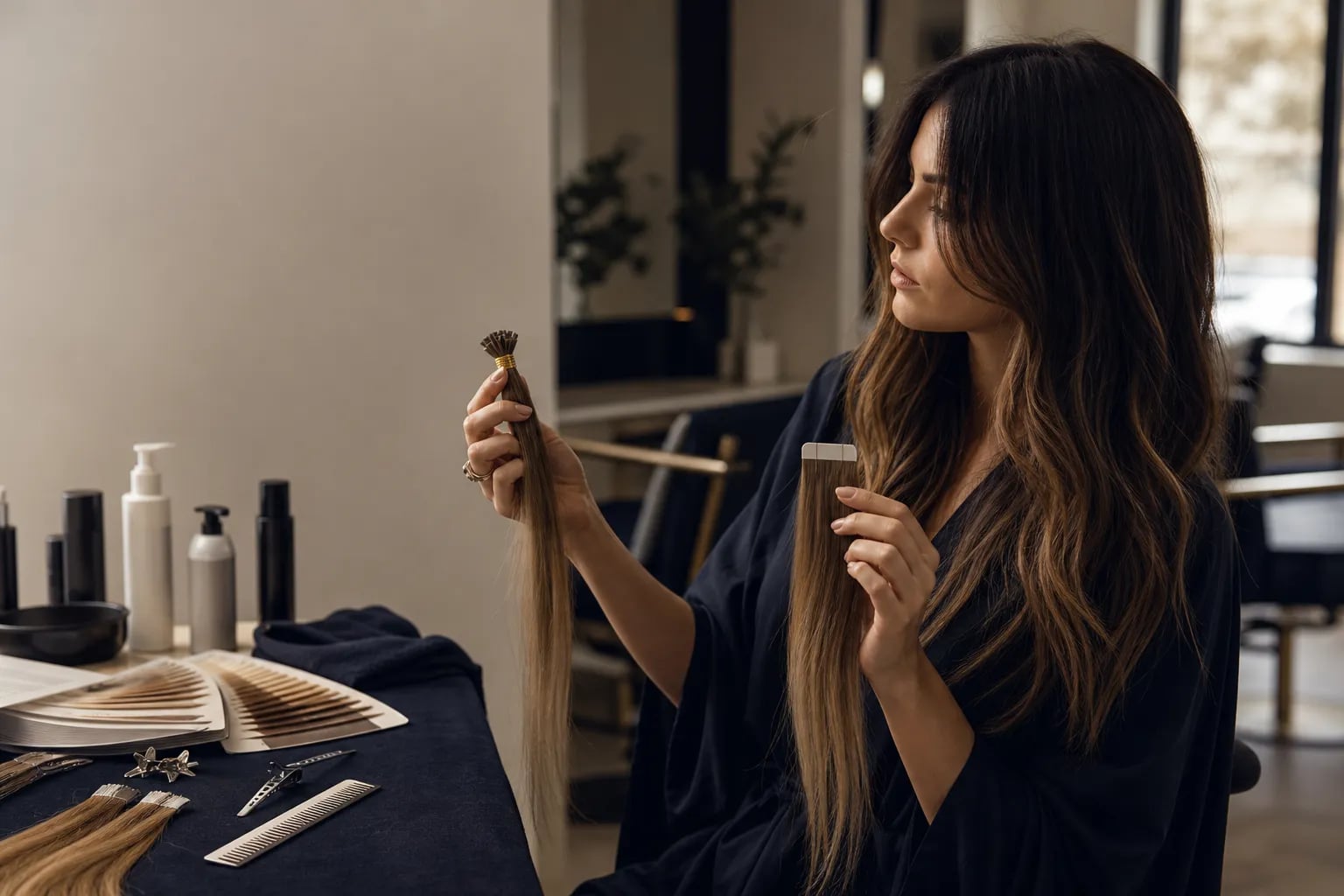
Wondering about the difference between hand-tied and tape-in extensions for a natural look? Hand-tied wefts sit flatter against the scalp and grow out more seamlessly across many hair types, but tape-ins can be just as invisible in fine-to-medium density hair when placement is precise and the texture match is right. Choosing between hand-tied vs tape-in extensions for a natural look comes down to three things: how each method attaches at the scalp, how the hair moves once installed, and how gracefully it transitions as your natural hair grows.
This article unpacks all three, plus what each method actually costs, how much maintenance each demands, and what questions to bring to your stylist before committing. At Harlow Beauty and Hair Salon in North Austin, our team works almost exclusively with hand-tied extensions, which means the reasoning behind these distinctions is built into every consultation we do.
Key takeaways
- Natural look winner: Hand-tied wefts produce a flatter, more seamless result across many hair types and densities.
- Tape-ins work well too: In fine-to-medium density hair with a precise texture match, tape-ins can be equally invisible when professionally applied.
- Grow-out matters: Tape-in tabs create a sharper, more noticeable gap around weeks four to six; hand-tied row migration is subtler and more gradual.
- Damage risk differs: Tape-ins carry adhesive and removal risks; hand-tied extensions carry tension risk if incorrectly loaded. Neither is zero-risk on compromised hair.
- Cost gap is real: Hand-tied installations run higher upfront, but the hair is reused at move-ups, which narrows the long-term difference.
- Test your updo first: Always test your most-worn ponytail or bun in the salon chair before finalizing row or tab placement.
How hand-tied vs tape-in extensions actually attach at the scalp
With hand-tied extensions, a stylist creates a horizontal anchor track using small silicone-lined beads clipped to narrow sections of your natural hair. A weft, a strip of hair with a very thin, hand-stitched seam, is then sewn directly onto that track. Because the seam is slender and pliable, it hugs the curve of your head rather than sitting away from it, keeping the connection point low, flat, and close to the scalp when enough natural hair covers it. Popular methods like IBE (invisible bead extensions) and NBR (natural beaded rows) are variations on this same principle, with IBE using a horseshoe-shaped track specifically designed so the beads never contact the scalp at all.
Tape-ins work differently. Two adhesive-backed wefts are pressed together around a thin slice of your natural hair, enclosing it like a sandwich. The tab lies parallel to the scalp, close to but not directly against the root. When matched well and applied in staggered rows, tape-ins lie convincingly flat. The tab itself is wider and more rigid than a hand-tied seam, however, and that distinction matters when your natural hair volume is limited.
High-density hair conceals both methods easily. Fine or low-density hair is where the difference becomes visible: there simply may not be enough natural hair to cover a tape tab in bright light or when the hair is parted carefully. Hand-tied wefts, because the attachment point is the bead rather than a wide adhesive panel, tend to disappear under less hair volume. This is why hair density is the first thing we assess in any extension consultation.
Will your extensions show in a ponytail or updo?
Hand-tied rows are generally updo-friendly, but “invisible in every style” is not guaranteed for either method. Visibility depends on how high the top row sits, how tightly the hair is pulled, and whether enough cover hair was left above the uppermost row. A loose bun or a low ponytail typically conceals the rows without effort. A very high, tight ponytail or a sleek style that exposes the lower nape may reveal the beads or thread at close range.
Tape tabs are most likely to show in very fine or sparse hair, in short hair around the part or hairline, and when hair is pulled into a high ponytail that stretches the root area. Because the tab is a fixed, rigid rectangle, it can create a slight visible seam in styles where the hair is pulled taut. If the extension texture doesn’t match the natural hair precisely, that transition line becomes even more obvious. Very oily hair adds another complication: the adhesive can loosen early, and a loose tab catches light and creates friction at the root.
The fix for both methods is the same. Before finalizing extension placement, test the exact updo or ponytail you wear most often while still in the salon chair. A skilled stylist will adjust row height or panel density on the spot based on what’s revealed. Always test your most-worn updo before leaving the chair.
How each method grows out over time
As your natural hair grows, a hand-tied bead-and-weft row migrates gradually away from the scalp. Between appointments, typically every six to nine weeks, the row is moved back up. The hand-tied hair itself is reused at each move-up appointment, which means the texture and color you chose at installation stay consistent for six to twelve months with good care. The grow-out is a broad, subtle downward shift across the whole row rather than a sharp localized gap.
Tape-in grow-out looks different. By weeks four to six, the adhesive tab has migrated noticeably from the scalp and can begin lifting or catching light when the hair moves. Every six to eight weeks, the tabs are removed with a solvent, re-taped, and reinstalled closer to the root. The extension hair itself typically lasts four to eight months, and sometimes longer with high-quality hair and careful handling, but each maintenance visit requires new adhesive.
| Factor | Hand-tied wefts | Tape-ins |
|---|---|---|
| Maintenance interval | Every 6–9 weeks | Every 6–8 weeks |
| What happens at maintenance | Row moved up, same hair reused | Tabs removed, re-taped, reinstalled |
| Hair lifespan | 6–12+ months | 4–8 months typical |
| Grow-out visibility | Gradual, low-profile shift | Tab gap becomes noticeable at 4–6 weeks |
| Movement and flex | Weft bends with the head; softer swing | Flatter and more anchored; tabs can feel rigid |
Which method is safer for fine or thinning hair?
Tape-in removal requires a solvent to break down the adhesive. When done correctly by an experienced stylist, the process is safe. When tabs are removed improperly, pulled too quickly, or left in too long, the adhesive can strip fragile strands or cause breakage around the attachment point. Very oily hair also causes the adhesive to loosen early, which adds friction and stress to the roots above the tab. For anyone with damage, over-processing, or active shedding, these risks deserve serious consideration before choosing tape-ins.
Hand-tied wefts distribute weight across a horizontal row rather than concentrating it on individual points, which is gentler on the scalp overall. The main risk is tension: if rows are placed too tightly, spaced too close together, or carry more hair than the natural strands can support, traction stress builds over time. A properly calibrated installation with the right weft weight for your density avoids this. The bead itself contains no adhesive, so removal is clean and solvent-free.
For fine or thinning hair, hand-tied wefts installed at the correct weight are the lower-risk option. They avoid adhesive chemistry entirely and distribute load more evenly. That said, no extension method is zero-risk on compromised hair. Harlow operates on a consult-led approach that includes a thorough hair health assessment before installation.
Cost and maintenance: what you’re actually committing to
Both methods require ongoing investment, and the upfront price gap is real. Hand-tied installations take two to five hours, while tape-ins typically run under two hours, and that time difference accounts for much of the initial cost difference. Knowing what each stage involves makes the comparison more useful than a single dollar figure.
Your actual cost will vary based on hair quantity, length, salon market, and stylist experience. Always confirm with your salon whether extension hair is included in the installation quote.
Because hand-tied hair is reused at each move-up and tape-ins require new adhesive tabs every visit, the long-term cost gap narrows with quality hair. A tape-in move-up means removing every tab with solvent, checking the natural hair for any adhesive residue or breakage, re-taping, and reinstalling. A hand-tied move-up means loosening the beads, sliding the row upward, resecuring, and blending.
The actual total depends heavily on hair quantity, length, salon market, and stylist experience. Any quote you receive should clearly state whether the extension hair is included in the installation price, since that line item varies widely between salons and can significantly change the number you’re working with.
What to ask your stylist before choosing
A consultation is only as valuable as the questions you bring to it. The most revealing opening question is this: “Which method do you recommend for my hair and lifestyle, and what trade-offs would I have with the other option?” A qualified stylist should compare comfort, visibility, upkeep, hair protection, and long-term cost without defaulting to whatever method they install most often.
Beyond that opening question, bring this checklist:
- How much natural hair do I need to conceal the attachment point for each method?
- Can you show me where the rows or tabs would sit based on my current density?
- What does a six-week grow-out look like with each method in my specific hair type?
- Which method will hold up best in the styles I wear most often?
- How does each method behave if I color my hair between appointments?
- What are the signs that extensions are stressing my natural hair, and what should I do?
- What is the complete first-year cost, including hair, installation, move-ups, and products?
Also ask to see examples of each method on clients with your hair type and density. Close-up before-and-after photos are far more informative than website gallery shots taken under ideal lighting conditions. Always test your most-worn updo before you leave the chair.
Which method actually fits your hair?
For most clients prioritizing natural-looking hair extensions, hand-tied wefts deliver a more seamless result. The attachment point is slimmer, the grow-out is more gradual, and the method works across a wider range of densities without adhesive risk. Tape-ins are a strong option for fine-to-medium hair when the texture match is precise and the stylist has strong placement skills, but they require more diligent maintenance to stay invisible as the weeks pass.
The difference between hand-tied and tape-in extensions for a natural look ultimately comes down to fit: the right method for your hair density, your lifestyle, and how you wear your hair every day. Use the checklist above, test your styling in the salon chair, and ask to see the grow-out timeline before you commit.
At Harlow Beauty and Hair Salon on Burnet Road in North Austin, our stylists specialize in hand-tied extensions and walk every new client through a detailed consultation before anything is booked. If you’re in the Austin area and want to see how each method would actually sit in your specific hair, reach out to our team to get started. The right extensions should look exactly like yours.
Frequently Asked Questions
How long does installation take for hand-tied versus tape-in extensions?
Hand-tied installations typically take two to five hours, while tape-ins typically run under two hours. The longer chair time for hand-tied work accounts for much of the initial cost difference between the methods.
How often will I need maintenance appointments for each method?
Hand-tied wefts usually need move-ups every six to nine weeks, and tape-ins need maintenance every six to eight weeks. During those visits hand-tied rows are moved up and the same hair is reused, whereas tape-in tabs are removed with solvent, re-taped, and reinstalled.
Does very oily hair cause problems with tape-in adhesive?
Yes, very oily hair can loosen tape-in adhesive early and add friction that stresses the roots above the tab. When adhesive loosens it can catch light or lift, making the tab more visible and increasing the risk of early wear or handling.